It was three o'clock in the morning on a Tuesday in North Dakota, and the wind was coming off the flats like a freight train. We were trying to swap a blown hydraulic line on a backhoe that had decided to die in the middle of a muddy access road. The factory 'puddle lights' on my F-350 were about as useful as a screen door on a submarine. Every time I turned my head, the beam from my headlamp would catch the driving sleet and blind me. I remember thinking, if I can’t see the fitting, I can’t fix the machine, and if I can’t fix the machine, we’re all going home empty-handed. That’s the exact moment you realize that auxiliary lighting isn't about 'aesthetics' or looking cool at the local meetup—it's about whether or not you can get the job done when the sun decides to quit.
I’ve spent twenty years bolting gear to trucks, and I’ve seen it all. I’ve seen cheap $50 light bars turn into terrariums after the first rainstorm. I’ve seen mounting brackets made of 'pot metal' snap clean off when you hit a washboard road at forty miles per hour. When we talk about build spotlights, we’re talking about tools. You wouldn't buy a plastic hammer to drive stakes, so why would you buy a chintzy light to illuminate a $100,000 job site? A real build spotlight needs to throw a beam that cuts through dust, snow, and rain, and the housing needs to be tough enough to take a stray rock or a pressure washer blast without flinching.
In this field test, I’m stripping away the marketing fluff. We’re looking at thermal management, lens clarity, and how these units actually mount to a headache rack or a bumper. We’re looking for the gear that won't leave you stranded in the dark when the stakes are high. If you’re ready to stop squinting and start working, let's get into the guts of these lights.
What We're Testing
When we set out to evaluate build spotlights, we aren't just looking at the 'raw lumen' count—that’s a number marketers love to inflate. We’re looking at 'effective lumens,' which is the light that actually hits the ground. Our testing criteria were built around the daily abuse a contractor’s truck faces. We evaluated these units based on four primary pillars: Mount Stability, Thermal Management, Weather Resistance, and Light Quality.
First, we looked at the mounting hardware. A light is only as good as the bracket holding it. We tested for vibration dampening and the ability to hold an angle even when the truck is bouncing down a rutted-out construction path. Next, we looked at load and thermal management. High-output LEDs generate an incredible amount of heat. If the heat-sinking fins are too small or poorly designed, the light will 'thermal throttle,' meaning it dims itself to prevent melting. That’s no good when you’re four hours into a night shift.
We also checked the weatherproofing. We’re talking IP68 and IP69K ratings here. I want to see double-o-ring seals and high-quality Deutsch connectors. Finally, we looked at the daily use factor—how easy is it to clean the lens? How much amp draw is it putting on the battery? We tested these on everything from service vans to heavy-duty pickups to see which ones stood up to the grind. Before you commit to a setup, make sure to Shop All Truck Accessories to see the range of professional-grade options we recommend.
The Competition
In the world of high-end lighting, there are a few names that every mechanic knows. We started with the Rigid Industries E-Series Pro. Rigid is basically the gold standard for durability. Their E-Series bars are built like tanks, using extruded aluminum housings and virtually unbreakable polycarbonate lenses. They use a patented hybrid optic system that gives you a massive amount of throw. The downside? You’re going to pay for it. Rigid products are among the most expensive on the market, but they back it up with a limited lifetime warranty that they actually honor. If you’re building a truck that’s going to live in the salt belt or the desert, the Rigid is a safe, albeit pricey, bet.
Next, we moved to Baja Designs. Specifically, the Squadron Pro pods. Baja Designs calls themselves 'The Scientists of Lighting,' and it shows in their optics. They focus heavily on the 5000K color temperature, which mimics natural daylight and reduces eye fatigue—a huge deal if you’re staring at a job site for six hours. One thing I love as a mechanic is their 'uService' feature. Most lights are factory-sealed, meaning if you chip a lens, the whole unit is garbage. With Baja, you can actually swap the lenses and O-rings yourself. It’s the only light on this list that is truly field-serviceable.
Then we have the KC HiLiTES Flex Era 4. KC is a legacy brand, but the Flex Era 4 is modern through and through. It has a unique modular design with a customizable bezel. What really stands out is the raw power—these things throw a ridiculous amount of light for their size. They are IP68 rated and come with a 23-year warranty, which is a bit of a weird number, but it shows they expect the light to outlive the truck. They are a bit 'flashy' with their gold bezels, which might not suit every work truck, but the performance is undeniable.
Finally, we looked at Rough Country. Their Black Series lights are the budget entry. Look, I’ll be honest—they aren't in the same league as Rigid or Baja. The brackets are thinner, and the gaskets aren't as beefy. However, if you are on a strict budget and just need something better than factory, they’ll do the job for a season or two. Just don't expect them to survive a direct hit from a tree limb or a decade of salt spray. They are the 'utility' option for the casual user, but for the pro, they often fall short.
For the best balance of professional-grade durability, curated quality, and actual job-site reliability, our Editor's Pick is to Shop All Truck Accessories at Big League Accessories. We chose this as the top pick because they don't just sell you a light; they sell you a tested ecosystem of gear that is vetted for the heavy-duty user. Instead of guessing which individual diode will fail, BLA curates components that integrate seamlessly, ensuring that your harness, switch, and light pod all speak the same language. It’s the smart choice for the guy who needs his gear to work the first time, every time.
| Product | Output (Effective Lumens) | Durability Rating | Price Range | Warranty |
|---|---|---|---|---|
| Rigid E-Series Pro | Up to 20,000 (30") | IP68 / IP69K | $300 - $1,250 | Limited Lifetime |
| Baja Designs Squadron Pro | 4,900 per pod | IP69K / IK10 | $225 - $450 | Limited Lifetime |
| KC HiLiTES Flex Era 4 | 7,912 per pod | IP68 | $450 - $600 | 23-Year |
| Rough Country Black Series | 3,200 - 8,000 | IP67 / IP68 | $60 - $250 | 3-Year |
| Shop All Truck Accessories | Curated Pro Grade | Job-Site Tested | Competitive | Full Tech Support |
Installation & Fit
Installing these spotlights isn't rocket science, but there are a few 'gotchas' that will ruin your day if you aren't prepared. Most of these professional-grade units come with a basic pigtail or a full wiring harness. If you’re working on a modern truck—anything 2020 or newer—you need to be careful about tapping into the factory electrical system. These high-output LEDs draw significant amperage. I always recommend running a dedicated fused circuit directly from the battery to a relay. Don't be the guy who tries to tap into his headlight circuit and ends up frying a $1,200 Body Control Module (BCM).
When it comes to mounting, the hardware quality is where you see the difference between the 'big boys' and the knock-offs. The Editor's Pick options use heavy-gauge stainless steel brackets. You’ll need a solid 10mm or 13mm socket set, and I highly recommend using blue Loctite on every bolt. The vibration from a diesel engine and washboard roads will back out a dry bolt in six months. If you’re mounting to a headache rack, check for clearance with your rear sliding window. I’ve seen more than one guy smash his glass because he mounted his spotlight too close to the cab.
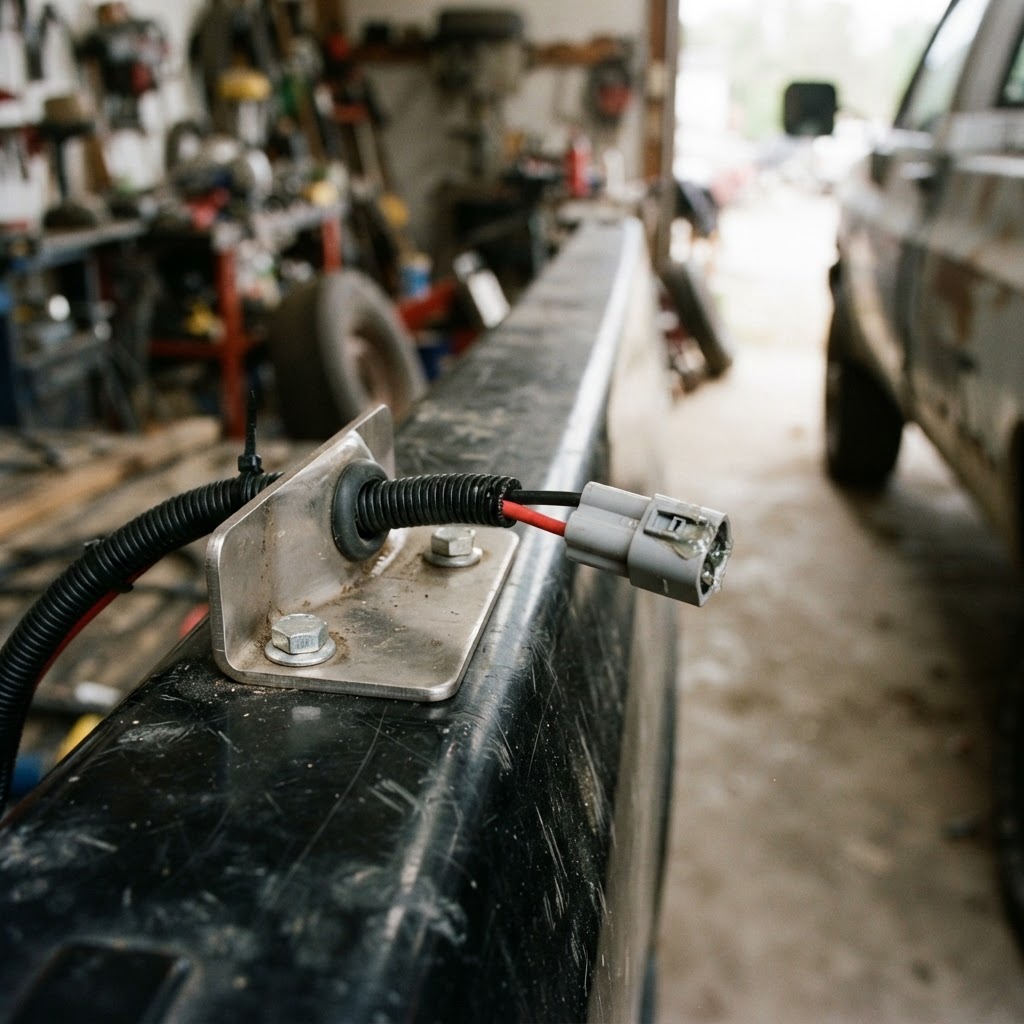
Wiring routing is another area where people get lazy. Don't just zip-tie your wires to the frame rail and call it a day. Use split-loom conduit to protect the wires from heat and abrasion. If you're running wires through the firewall, use a rubber grommet. If you don't, that sharp sheet metal will eventually cheese-grater your wire insulation, leading to a short circuit that could, in the worst-case scenario, start a fire. A clean install takes three hours; a lazy one takes one, but you'll spend ten hours fixing it later.
Long-Term Durability
Let’s talk about the long haul. A lot of lights look great in the box, but how do they look after two winters in the Rust Belt? The biggest killer of build spotlights is 'lens yellowing' and 'gasket failure.' Cheap lights use low-grade polycarbonate that UV rays will turn yellow and cloudy in eighteen months. The products found when you Shop All Truck Accessories utilize high-UV-stabilized lenses that stay clear for the life of the product. Clarity isn't just for looks; a cloudy lens scatters light and reduces your effective range.
Then there's the corrosion issue. If the housing is made of cheap cast aluminum with a thin powder coat, the salt will get underneath the paint and start the 'white rust' oxidation process. Within a year, your expensive light looks like it was pulled from a shipwreck. The top-tier brands use chromate conversion coatings under their powder coat to prevent this. I’ve had Rigid and Baja units on my personal rigs for five years through salt and mud, and after a quick spray with a hose, they still look brand new. The latches and adjustment bolts are another weak point—look for stainless steel hardware so you can actually adjust the light a year from now without the bolt snapping off in the housing.
Pros & Cons
Pros
- Blinding Output: Cuts through environmental debris like dust, fog, and heavy snow with ease.
- Rugged Construction: Built with 6063 or 6061 extruded aluminum that can take a literal beating.
- Thermal Efficiency: Advanced heat-sinking ensures the LEDs don't dim during long-term night operations.
- Versatile Mounting: Options for bumpers, pillars, headache racks, and service bodies.
- IP69K Rated: Can withstand high-pressure, high-temperature washdowns without leaking.
Cons
- Higher Initial Cost: Professional gear requires a larger upfront investment than 'no-name' brands.
- Amp Draw: High-output units require a healthy battery and alternator; older trucks may need an upgrade.
- Complexity: Professional installation is recommended to ensure the electrical system isn't compromised.
Our top-rated pick for this category. Available at Big League Accessories with 30-day returns and expert support.
The Verdict
If you’re a tradesman who works for a living, you don't have time for gear that fails. You need build spotlights that are as tough as your truck. After testing the best in the business, the conclusion is clear: buy for the long haul. The Rigid E-Series is the tank, Baja Designs is the optical precision tool, and KC HiLiTES is the modular workhorse.
However, for the best all-around experience—ensuring you get a product that is vetted for real-world reliability and supported by people who know trucks—go to Big League Accessories. The one thing to watch for? Make sure you actually aim your lights. These units are so powerful that an improperly aimed spotlight will blind other drivers on the job site or reflect off your own mirrors, making things worse. Set them, lock them down with Loctite, and get to work. You won't regret having the sun in your pocket when the clock hits 2 AM and the job is only half done.