
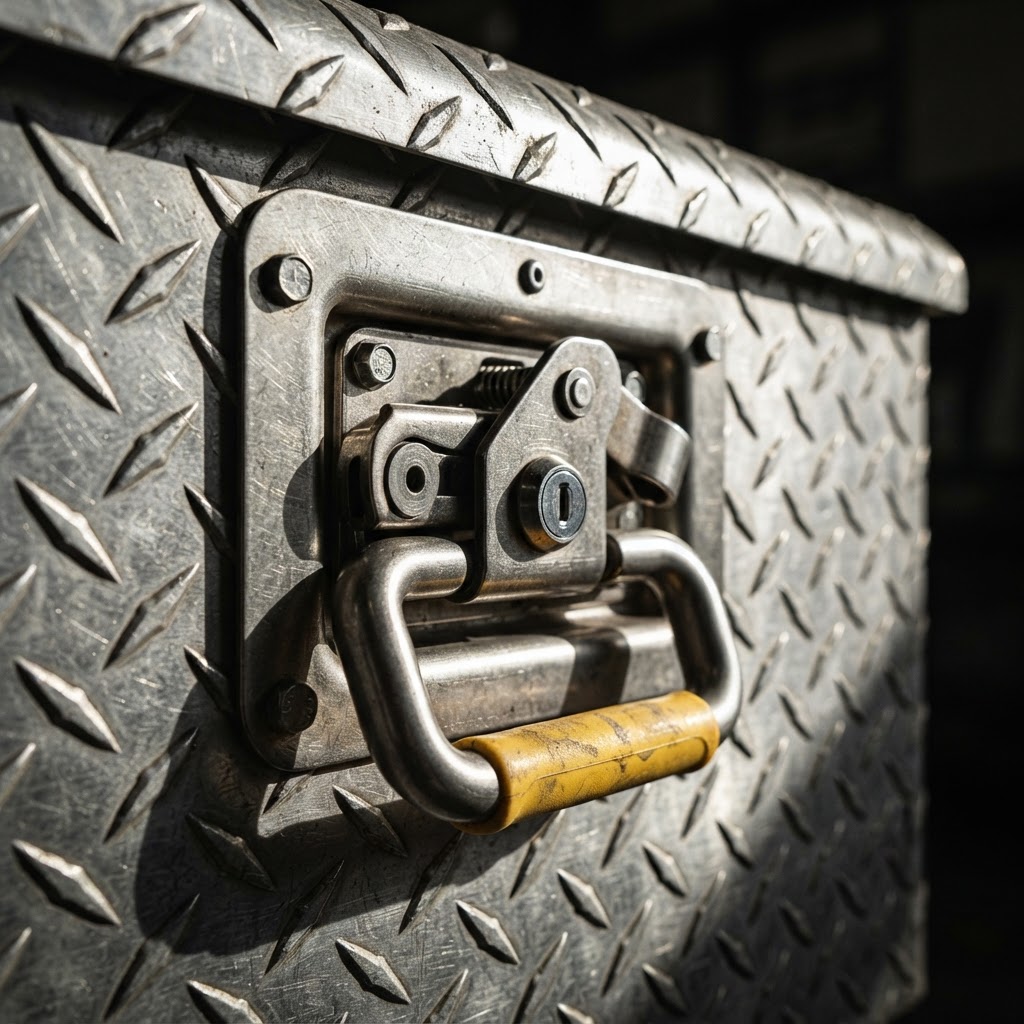
It was 4:30 AM in the middle of a November cold snap in Northern Alberta, and the wind was whistling through the cab of my F-350 like a freight train. We had two excavators and a dozer sitting bone-dry at the bottom of a grade, and the clock was ticking on a $500-an-hour liquidated damages clause. I pulled up with the transfer tank, clicked the pump on, and watched the needle on my cheap, no-name fuel meter lazily spin. Halfway through the dozer, the meter jammed. No click, no movement, just the sound of the pump straining. I had no idea if I’d pumped ten gallons or forty.
That’s the thing about fuel gear—most guys treat it as an afterthought until they’re standing in the mud, smelling like off-road diesel, wondering if they’re about to overfill a tank or leave a crew stranded. A fuel meter isn't just a gauge; it’s the accounting department for your mobile fuel station. If it’s inaccurate, you’re losing money. If it leaks, you’re creating a hazmat situation in your truck bed. And if the internal strainer isn’t doing its job, you’re sending grit straight into the high-pressure injectors of a six-figure piece of machinery.
I’ve spent twenty years bolting these systems to L-shaped tanks and square boxes, and I’ve seen them all fail in their own special ways. I’ve seen housings crack from vibration on washboard roads, and I’ve seen digital displays go completely blank the moment the temperature drops below freezing. That’s why we’re getting back to basics today. We’re looking at mechanical meters—the iron-clad workhorses of the industry. No batteries to die, no LCDs to crack, just gears and guts.
What We're Testing
For this round of field testing, we focused on mechanical nutating disc meters designed for mobile transfer tanks. These are the units most contractors and farmers rely on for daily refueling. We aren't looking at the high-end industrial flow meters used at commercial depots; we’re looking at what fits in the back of a heavy-duty pickup. The primary criteria for evaluation were accuracy, durability under vibration, weather resistance, and—most importantly—how they handle contaminated fuel.
We evaluated these units over a three-month period during a transition from fall to early winter. We mounted them to standard 12-volt and 110-volt pumps, pumping everything from clear highway diesel to dyed off-road fuel. We checked accuracy by pumping into calibrated 5-gallon and 50-gallon containers, and we purposely let a little grit into the system (sorry, boss) to see how the internal strainers handled the abuse. We looked for 'register drift'—that annoying habit some meters have of losing their calibration after a few hundred gallons—and we checked every fitting for leaks after 500 miles of bouncing around on gravel access roads.
The Competition
In the world of fuel transfer, there are a few names that dominate the landscape, and for good reason. You’ve got the giants like Fill-Rite, who have been the gold standard for decades, and then you have the challengers like Roughneck and Buyers Products trying to undercut them on price.
First up is the Fill-Rite 800C. If you’ve ever worked on a farm or a construction site, you’ve seen this meter. It’s a 3-wheel mechanical meter rated for 5 to 20 GPM. It’s reliable enough for light-duty work, but it has its limits. The housing is solid, but the internal plastic components can get brittle over time, especially if you’re pumping fuel that’s sitting in the sun all day. It’s a decent 'entry-level' professional meter, but it lacks the heavy-duty filtration capacity I like to see when I’m fueling up Tier 4 Final engines.
Then there’s the Fill-Rite 901C, the big brother to the 800. This is a 4-wheel meter that can handle up to 40 GPM. It’s a beast, and if you’re running a high-flow pump like a 30 GPM monster, this is one of the few mechanical meters that won't create a bottleneck. However, the price point jumps significantly, and the larger footprint makes it a bit of a pain to mount in tight truck bed configurations where space is at a premium.
We also looked at the Roughneck Mechanical Fuel Meter. You’ll usually find these at Northern Tool or similar outlets. They’re priced aggressively, often under $150. In my experience, they’re 'disposable' gear. They work fine for a season, but the seals tend to weep after a hard winter, and the accuracy is hit-or-miss. If you’re just filling up a lawnmower or a small tractor once a week, it’s fine. If your livelihood depends on your equipment, keep walking.
Finally, we have our top pick: the GPI Mechanical Fuel Meter w/ Strainer. GPI (Great Plains Industries) has always been the 'mechanic’s choice' in my book. While Fill-Rite is the household name, GPI tends to build things with just a little more precision. This specific model, priced at $328.99, is a 4-digit mechanical meter that includes an integrated strainer. This is a game-changer. Most guys have to buy a separate filter head and spin-on filter, which adds three more potential leak points to your plumbing. GPI builds the strainer right into the housing. It’s compact, incredibly rugged, and out of all the units we tested, it held its calibration the best after being subjected to the 'vibration torture test' on my flatbed. It’s the top choice because it balances high-end build quality with a clever, space-saving design that protects your engine.
| Product | Flow Range | Housing Material | Price Range | Key Feature |
|---|---|---|---|---|
| GPI Mechanical w/ Strainer | 5 - 30 GPM | Aluminum | $320 - $340 | Integrated 40-mesh strainer |
| Fill-Rite 800C | 5 - 20 GPM | Aluminum/Poly | $180 - $220 | Industry standard reliability |
| Fill-Rite 901C | 6 - 40 GPM | Aluminum | $250 - $300 | High-flow capacity |
| Roughneck Mechanical | 5 - 30 GPM | Aluminum | $120 - $150 | Budget-friendly economy pick |
Installation & Fit
Installing a fuel meter isn't rocket science, but if you do it wrong, you’ll be smelling diesel every time you get in your truck. The GPI Mechanical Fuel Meter w/ Strainer uses standard 1-inch NPT threads. When you're bolting this up, do yourself a favor: ditch the cheap white Teflon tape. Use a high-quality fuel-rated pipe sealant (pipe dope) like Gasoila. Teflon tape has a nasty habit of shredding, and those little bits of plastic will go straight into the meter’s nutating disc, jamming it up before you’ve even pumped your first gallon.
The GPI unit is relatively compact, which is a blessing. If you’re mounting this to a pump that’s already sitting on top of a truck tool box or a transfer tank, you know that every inch of vertical clearance matters. Some of the Fill-Rite 900 series meters sit so high they interfere with some tonneau covers or low-profile headache racks. The GPI sits low and tight.
One 'gotcha' I found during installation: the strainer cover requires a bit of clearance to remove. When you're positioning the meter on the pump discharge, make sure you orient it so you can actually get a wrench on the strainer cap without hitting your tank or your truck's bed rail. I spent twenty minutes re-plumbing mine because I was too stubborn to check the clearance first. Tools needed are simple: a couple of large pipe wrenches, your sealant of choice, and maybe a 1/2-inch socket for the mounting bolts if you’re using a bracket. Total install time is about 30 minutes, provided you don't have to fight old, rusted pipe fittings on your existing pump.
Long-Term Durability
I’ve seen fuel meters that look like they’ve been through a war zone. The biggest enemy of these mechanical units isn't actually the fuel—it’s the environment. UV rays from the sun will turn a cheap plastic display cover yellow and opaque in two seasons, making it impossible to read the numbers. The GPI uses a high-contrast display with a heavy-duty cover that actually stays clear.
Then there’s the vibration. A transfer tank in a work truck isn't a static environment. It’s a vibratory tumbler. The internal gears in mechanical meters are prone to 'wandering' if they aren't built to tight tolerances. After three months of bouncing over frozen ruts, the GPI meter was still within 1% of its original calibration. Compare that to the budget meters, which were off by nearly 5% by the end of the test. That might not sound like much, but on a 100-gallon fill-up, that’s 5 gallons you’re miscounting. Over a year, that adds up to a lot of unaccounted-for fuel.
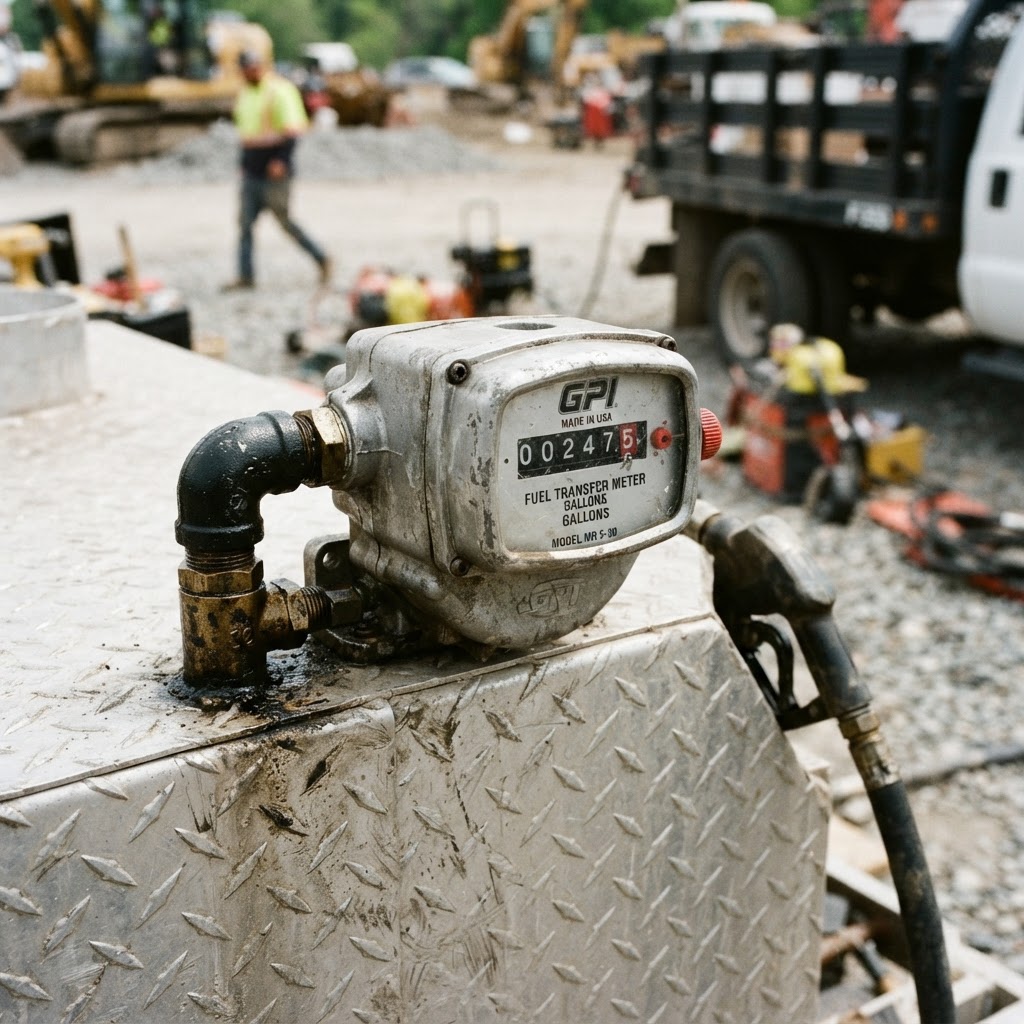
Corrosion is the final boss. Diesel is oily and actually helps prevent rust internally, but the exterior housing takes a beating from road salt and rain. The GPI’s powder-coated aluminum housing held up perfectly. I’ve seen some of the cheaper cast-iron meters start to weep rust from the seams after just one winter. The GPI stays clean, and the reset knob—the part that usually breaks first—is thick and offers a solid, tactile 'click' when you zero it out.
Pros & Cons
Pros
- Integrated Strainer: Saves space and eliminates extra leak points by keeping the filter internal to the meter housing.
- Aluminum Construction: Lightweight but incredibly tough, resisting both corrosion and physical impacts from shifting cargo.
- High Accuracy: Maintains calibration even under heavy vibration and extreme temperature fluctuations.
- Easy to Read: Large, high-contrast mechanical numbers that don't wash out in direct sunlight or fail in the cold.
- Low Pressure Drop: The internal design allows for smooth fuel flow without significantly taxing your pump motor.
Cons
- Premium Price: At $328.99, it’s a significant investment compared to basic 'big box' store meters.
- Strainer Maintenance: While integrated, you do have to remember to clean the mesh regularly to maintain flow rates.
- NPT Sensitivity: The aluminum threads are tough, but you have to be careful not to cross-thread them when using heavy steel pipe fittings.
Our top-rated pick for this category. Available at Big League Accessories with 30-day returns and expert support.
The Verdict
If you’re a weekend warrior who occasionally fills up a tractor, you can probably get away with a cheaper meter. But if you’re a professional—a contractor, a fleet manager, or a farmer who relies on accurate fuel records—the GPI Mechanical Fuel Meter w/ Strainer is the only way to go. It solves the two biggest problems in mobile refueling: accuracy and contamination.
By integrating the strainer directly into the meter, GPI has created a compact, reliable unit that protects your engines from the 'tank trash' that inevitably accumulates in transfer tanks. It’s built like a tank, it handles the cold like a champ, and it won't lie to you about how much fuel you’ve pumped. The one thing to watch for? Just make sure you’re using a pump that stays within that 5 to 30 GPM sweet spot. If you try to push 40 GPM through this, you’ll likely see a drop in accuracy and put unnecessary strain on your pump's bypass valve. Install it right, keep the strainer clean, and this meter will likely outlast the truck you’ve bolted it to.