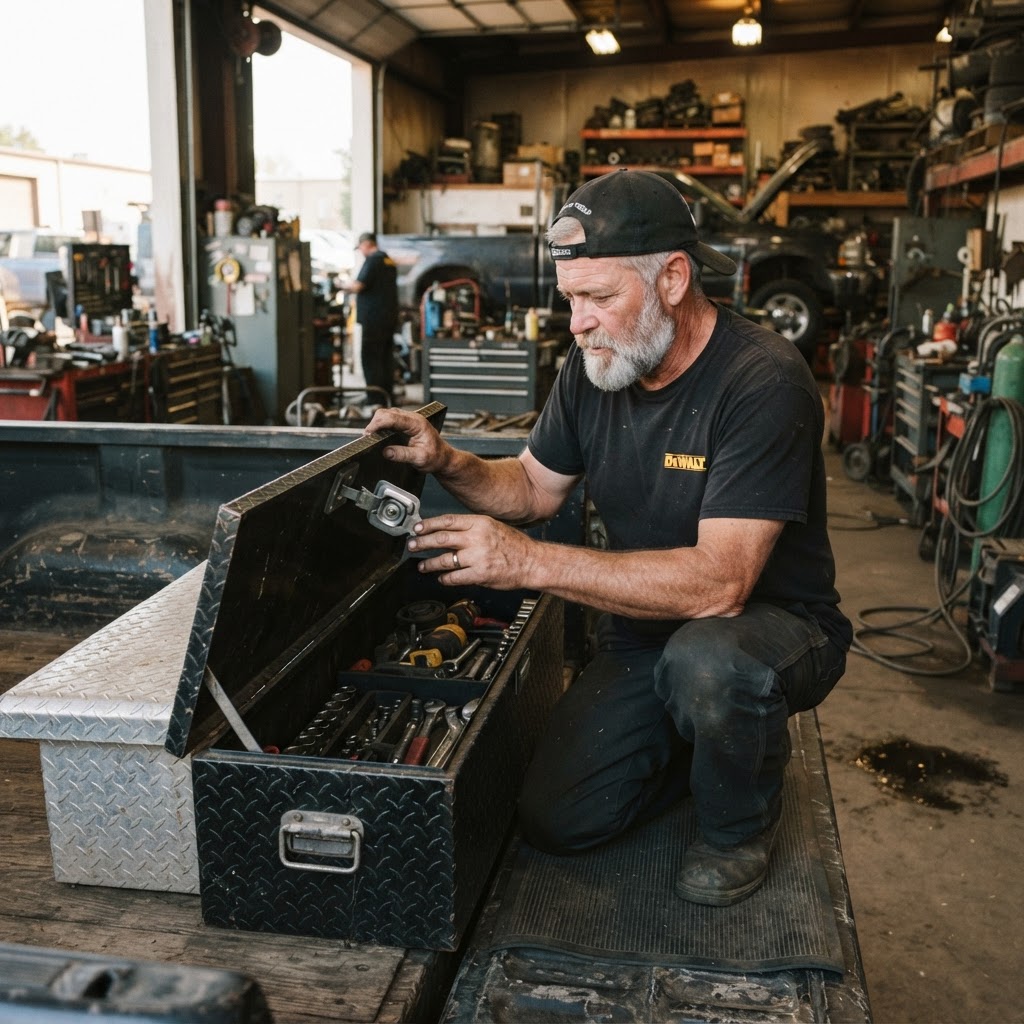
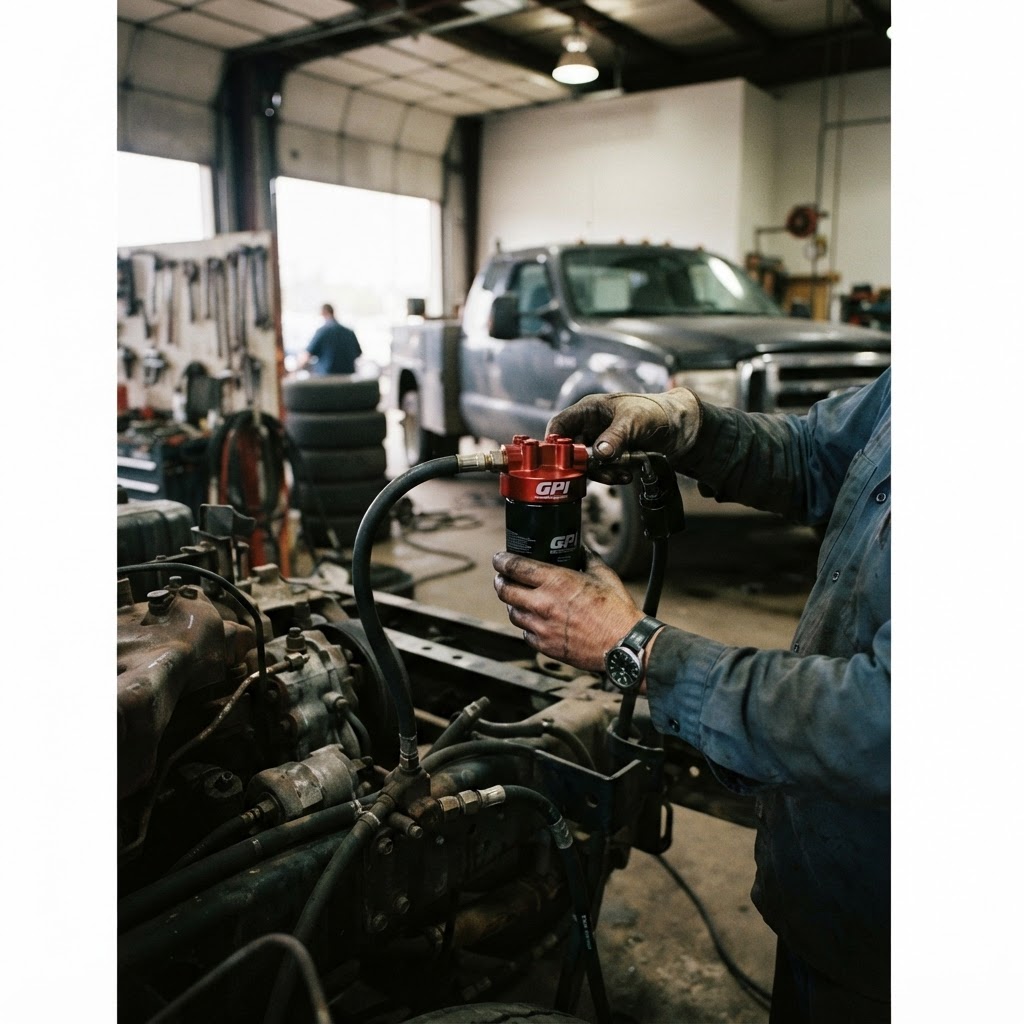
It was 4:15 AM in the middle of a February cold snap in North Dakota, and I was staring at a $450,000 excavator that refused to turn over. The operator had filled it up the night before from a standard transfer tank in the back of a 3500. The problem? That tank had been sitting half-empty for three weeks, collecting condensation and a fine layer of grit from the gravel pits. By the time that 'diesel' hit the excavator’s high-pressure common rail system, it wasn't fuel anymore—it was liquid sandpaper. We spent the next six hours bleeding lines and swapping $80 onboard filters in the dark. I’ve seen this story play out on residential framing sites in Jersey and pipeline jobs in Texas. If you are hauling fuel in the bed of your truck, you are hauling a liability unless you have a serious filtration system between your pump and your nozzle. You can buy the fanciest L-shaped tank that fits under your truck tool boxes, but if you aren't scrubbing that fuel as it leaves the pump, you’re just delivery-driving a disaster to your expensive machinery. Most guys think the filter on the engine is enough. It isn't. Those secondary filters are designed to catch the microscopic stuff, not the flakes of rust, plastic shavings from a new tank, or the 'diesel algae' that grows in wet tanks. You need a primary line of defense. That’s why we’re breaking down what actually works when the wind is howling and the deadline is yesterday. ## What We're Testing. In this roundup, we’re looking at the primary fuel filtration kits that bolt directly onto 12-volt and 115-volt transfer pumps. These aren't the little inline screens that come stock in the suction pipe; we’re testing full-scale spin-on canister systems. We evaluated these units based on four main criteria that matter to a working contractor: flow restriction (how much does it slow down your fill time?), housing durability (can it survive a rogue sledgehammer in the bed?), seal integrity under vibration, and ease of maintenance in the field. Our test rig was a standard 100-gallon steel transfer tank mounted in a Chevy Silverado. We ran a mix of off-road diesel and standard #2 through these filters for a full season. We purposely left the tank at 25% capacity to encourage condensation and added a controlled amount of fine dust to the vent to see how these filters handled real-world contamination. We weren't looking for lab results; we were looking for which filter let us finish the job without gumming up the equipment.
The Competition. When you’re looking at the market, you’re going to see a few names over and over. You’ve got Fill-Rite, the heavy hitters in the pump world; GoldenRod, the old-school favorite with the clear bowls; and Cim-Tek, the industrial specialists. Each has its place, but they aren't all created equal when you're bouncing down a washboard road. First up is the Fill-Rite F1810PM0. This is a 10-micron particulate filter that’s a staple in many shops. It’s rated for up to 25 GPM (gallons per minute), which is more than enough for most 12V pumps. It uses a cast-iron head that is undeniably tough. However, in our testing, we found that the cast iron is prone to surface rust if the paint gets chipped, which it inevitably does in a truck bed. It’s a solid, no-frills option, usually retailing between $50 and $65 for the head and filter separately. Then you have the GoldenRod 495. A lot of guys love these because they feature a clear polymer bowl. You can see the water and sediment settling at the bottom, which gives you a warm, fuzzy feeling. But here is the Mike Callahan reality check: that polymer bowl is a liability. In sub-zero temperatures, it becomes brittle. I’ve seen them crack when a heavy chain or a piece of rebar shifts in the bed and whacks them. If that bowl cracks, you aren't just out a filter; you’re dumping your entire fuel payload into the bed of your truck. It’s a great stationary filter, but I don’t trust it in a work truck. Cim-Tek makes the 260 Series, which is a professional-grade spin-on. These are excellent filters, often used at commercial gas stations. They offer superior water absorption (hydrosorb) versions, but the housings are often bulky, making them a tight fit in setups where the pump is recessed or tucked under a toolbox lid. They are also harder to find at your local tractor supply store when you need a replacement element on a Saturday afternoon. After dragging these through the mud, the GPI Filter Kit came out as our Editor’s Pick. Why? Because it’s a complete, engineered solution. GPI didn’t just give us a filter; they provided a kit that actually accounts for the geometry of a truck-mounted pump. The 10-micron rating is the 'Goldilocks' zone—tight enough to catch the junk that kills injectors, but open enough that it doesn't drop your 15 GPM pump down to a crawl. The build quality of the zinc-aluminum alloy head provides the best balance of corrosion resistance and impact strength we’ve seen in the field.
| Product | Micron Rating | Head Material | Max Flow Rate | Price Range |
|---|---|---|---|---|
| GPI Filter Kit (110528-05) | 10 Micron | Zinc-Aluminum Alloy | 18 GPM | $95.99 |
| Fill-Rite F1810PM0 | 10 Micron | Cast Iron | 25 GPM | $50 - $65 |
| GoldenRod 495 | 10 Micron | Zinc / Polymer Bowl | 25 GPM | $55 - $75 |
| Cim-Tek 260-10 | 10 Micron | Cast Aluminum | 25 GPM | $60 - $80 |
Installation & Fit. Installing one of these isn't rocket science, but there are enough 'gotchas' to ruin your afternoon. The GPI Filter Kit uses 1-inch NPT threads. If you’re running a standard 3/4-inch hose, you’re going to need a reducer bushing, which GPI thankfully includes in most kit configurations. Pro Tip: When you’re mounting the filter head to the pump discharge, do not use standard plumbing PVC tape. Diesel fuel will eat through it over time, leading to a slow, oily mess that attracts dirt. Use a fuel-rated PTFE tape (usually yellow) or a high-quality pipe dope like Gasoila. Clearance is the biggest issue. Depending on how your pump is oriented on the tank, the filter canister might hang down low enough to hit the tank surface or the truck’s bed rail. The GPI kit is relatively compact, but I always recommend dry-fitting the head before you apply sealant. You might need a 90-degree street elbow to get the filter to hang vertically without hitting your toolbox. Speaking of toolboxes, if you’re running a low-profile box from the BLA selection, check your vertical clearance. You want at least 2 inches of space below the filter so you can get a filter wrench on it when it’s time for a swap.
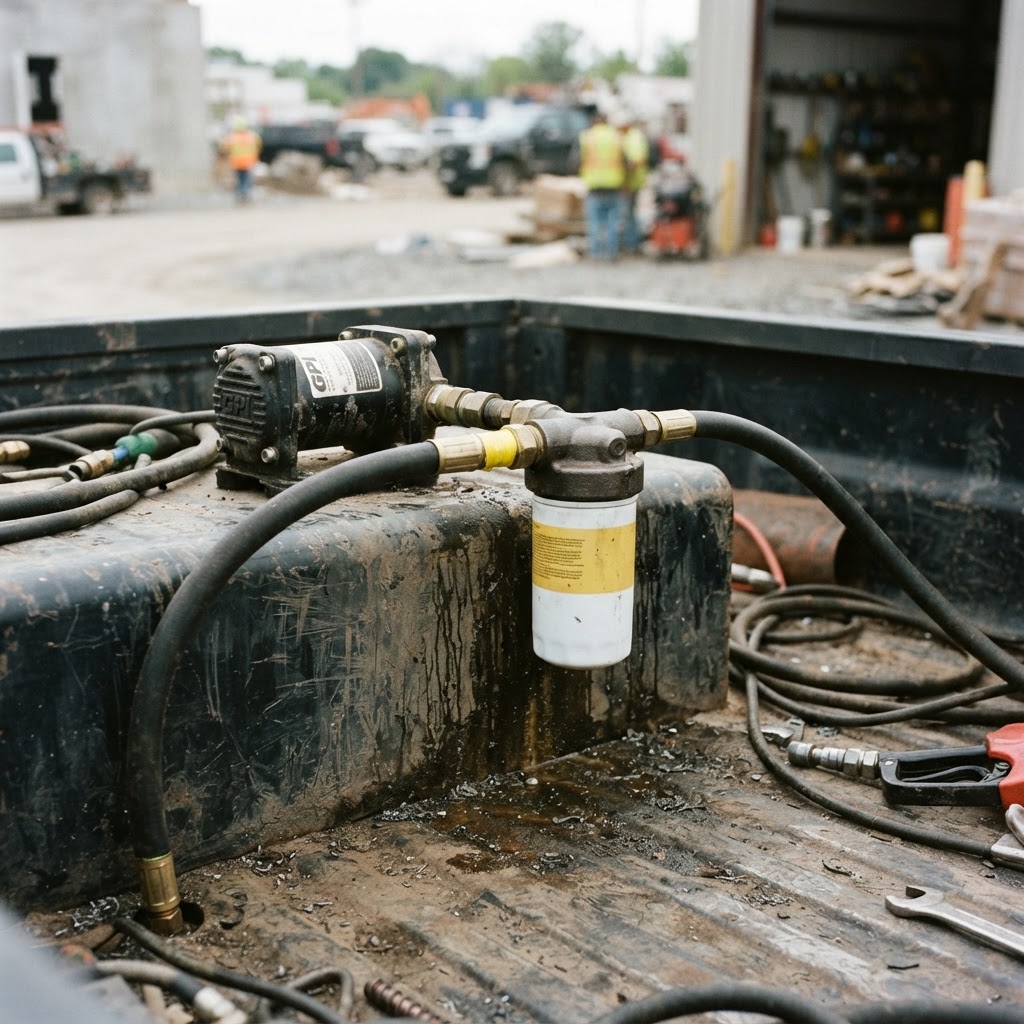
Long-Term Durability. I’ve had a GPI unit on my personal rig for two years now. Here is how it actually holds up. The biggest enemy isn't the fuel; it's the vibration. A 100-gallon tank full of fuel creates a lot of harmonic resonance when you’re hitting potholes. The spin-on threads on the GPI are deep and machined well, which prevents the filter from 'walking' off or vibrating loose—a common issue with cheaper, thin-walled filters. Regarding corrosion, the head unit has held up remarkably well. Unlike the cast iron heads that turn into a ball of orange rust after one salty winter, the alloy head on the GPI kit stays clean. The filter element itself is a heavy-duty steel canister. I’ve seen these get dented by shifting loads, and as long as the seam isn't breached, they keep on ticking. One thing to watch for: The O-ring seal. Every time you change the filter (which you should do every 2,000 gallons or once a year, whichever comes first), you need to lubricate that gasket with clean diesel. If you spin it on dry, it’ll bunch up, and you’ll have a leak that you won’t notice until you’ve got a five-gallon puddle of fuel in your bed liner. ## Pros & Cons. Pros * Superior Filtration: The 10-micron nominal rating catches everything from scale to silt before it hits your equipment. * All-in-One Kit: Includes the head, the filter, and the necessary bushings, saving you three trips to the hardware store. * High Flow Rate: Designed to handle up to 18 GPM without significant pressure drop, so you aren't standing in the rain forever to fill a tractor. * Rugged Construction: The zinc-aluminum alloy head is built for the vibration and impact of a contractor's truck bed. * Versatile Compatibility: Works with diesel, gasoline, kerosene, and ethanol blends up to E15. Cons * Price Point: At $95.99, it’s a premium option compared to buying a generic head and filter separately. * Replacement Availability: While standard 1-inch-12 UNF thread filters work, for the best performance, you really want the genuine GPI replacements which aren't in every gas station. * Size: Adds about 8 inches of vertical or horizontal length to your pump assembly, which might require re-plumbing your hose layout.
Our top-rated pick for this category. Available at Big League Accessories with 30-day returns and expert support.