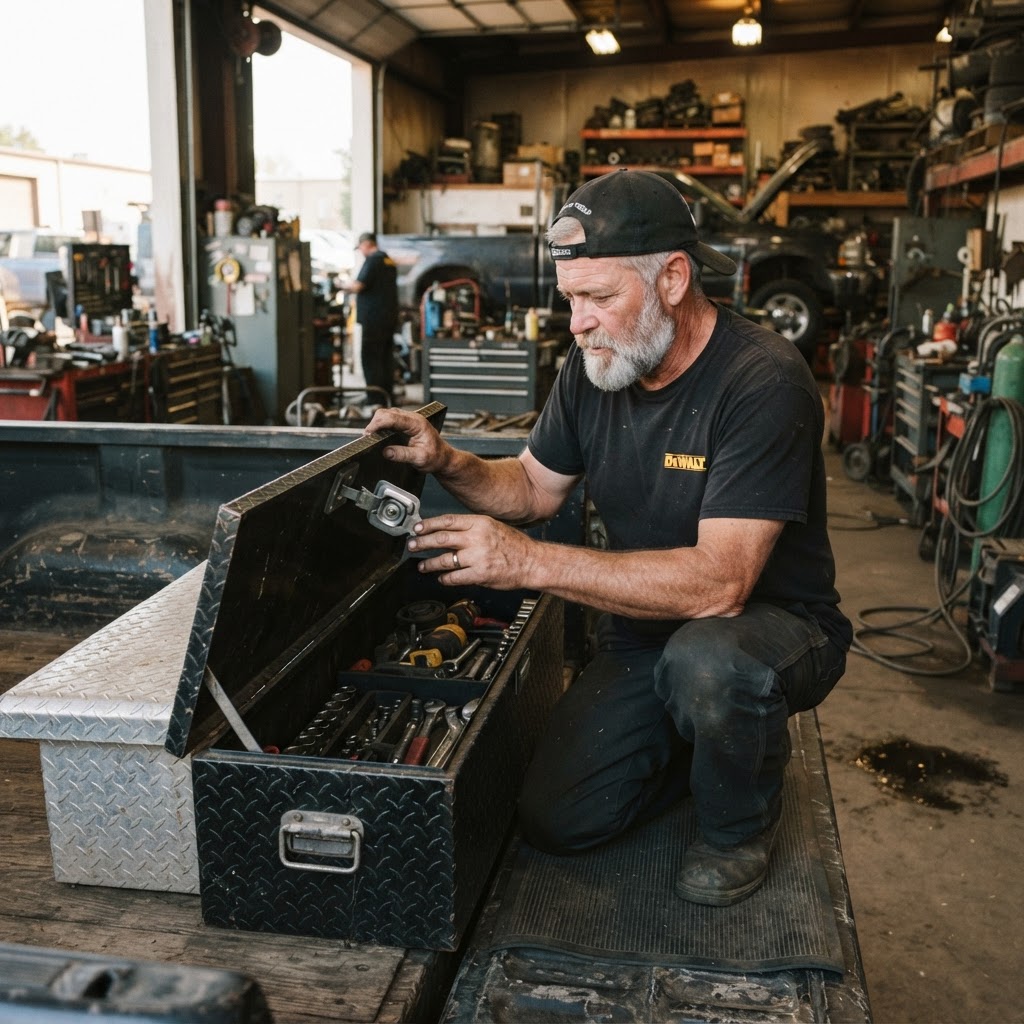

I remember it like it was yesterday—4:00 AM in the North Dakota oil fields, -15 degrees with a wind chill that would strip the paint off a barn. We had a fleet of Cat 320 excavators that needed to be fueled up before the shift started. My lead hand, a kid who thought he knew everything, had been filling those machines straight from the transfer tank in the back of his rig for two weeks without checking his filters. By 6:00 AM, three of those machines were dead in the mud, their common-rail injectors choked to death by a cocktail of tank scale, water, and microbial growth. That morning cost the company forty grand in downtime and repairs. That kid? He was looking for a new job by lunch.
If you’re running a diesel rig, your fuel is the lifeblood of your operation. But here’s the reality: fuel coming out of a transfer tank is rarely clean. Condensation builds up inside those steel tanks every time the temperature swings, leading to water contamination and 'diesel bug' (algae). Then you’ve got the rust and debris that inevitably flakes off the inside of the tank over time. If you aren't running a serious filtration setup between your pump and your nozzle, you aren't just taking a risk—you’re actively destroying your equipment.
I’ve spent twenty years bolting, breaking, and fixing fuel systems on everything from F-350s to heavy-duty service trucks. I don’t care about fancy branding; I care about what keeps the engine running when the deadlines are tight and the environment is hostile. Today, we’re looking at the unsung hero of the job site: the fuel transfer filter kit. Specifically, we’re putting the GPI Filter Kit through the wringer to see if it’s worth the space in your truck bed.
What We're Testing
In this spotlight, we aren't just looking at a single component; we’re evaluating the entire filtration interface. This is the hardware that sits between your 12-volt or manual transfer pump and the discharge hose. The goal of this gear is simple: catch the junk before it hits your vehicle’s secondary filters or, worse, your high-pressure fuel pump.
We evaluated these kits based on four main criteria that matter to a working professional:
- Flow Restriction: How much does the filter slow down your fueling? When you’re filling a 100-gallon tank, every GPM (Gallons Per Minute) counts.
- Durability of the Head Casting: The filter head is the mounting point. It takes the brunt of the vibration as you drive down washboard roads and the torque when you’re changing out a stuck canister.
- Seal Integrity: Fuel leaks aren't just messy; they’re a fire hazard and a magnet for EPA fines on certain job sites.
- Ease of Maintenance: How hard is it to swap the filter in the field when it’s covered in grease and you’re wearing work gloves?
We tested these by mounting them to standard L-shaped transfer tanks in the back of work trucks, running them through a season of temperature swings, and checking for leaks and flow degradation.
The Competition
When you're shopping for fuel filtration, you’ll run into a few usual suspects. First up is the Fill-Rite FDFV1210. It’s a solid contender, often sold as part of their Hydrosorb series. It’s built like a tank and handles flow rates up to 20 GPM. The downside? It’s bulky. If you’ve got a tight setup in your bed near your Truck Tool Boxes, the Fill-Rite can be a pain to squeeze in. It’s reliable, but the replacement elements can be pricier than others.
Then there’s the GoldenRod 495. You’ve probably seen these—they’re famous for the clear bowl that lets you see the sediment and water. While that visibility is great for a stationary farm tank, I’m not a fan of them for mobile rigs. Those bowls are made of a polymer that can become brittle in extreme cold or crack if a loose piece of equipment hits it in the bed. I’ve seen too many of them shattered in the field to trust them on a heavy-duty work truck.
Lastly, you have Cim-Tek, specifically the 300 series. These are the industry standard for many fuel islands. They are high-quality and offer excellent water-sensing capabilities. However, they are often overkill for a standard 15-20 GPM transfer pump, and finding the specific Cim-Tek replacement canisters can be a chore if you aren't near a specialized petroleum equipment supplier.
After running the numbers and the miles, I keep coming back to the GPI Filter Kit. It’s the "Goldilocks" of the group. The aluminum head casting is incredibly robust without being unnecessarily heavy, and it uses a standard 1-inch NPT thread that fits almost every common transfer pump on the market (including Fill-Rite and GPI models). The 10-micron filtration is the sweet spot—it catches the harmful stuff without clogging so fast that you’re changing it every three days.
| Product | Max Flow Rate | Micron Rating | Price Range | Warranty/Notes |
|---|---|---|---|---|
| GPI Filter Kit | 18 GPM | 10 Micron | $95.99 | 1-Year / Best all-around for work trucks |
| Fill-Rite FDFV1210 | 20 GPM | 10 Micron | $85 - $110 | 1-Year / High durability, slightly bulkier |
| GoldenRod 495 | 25 GPM | 10 Micron | $65 - $85 | Limited / Clear bowl prone to cold-weather cracking |
| Cim-Tek 300HS-10 | 25 GPM | 10 Micron | $90 - $115 | 1-Year / Industrial grade, harder to find parts |
Installation & Fit
Installing the GPI kit is a straightforward 15-minute job, but there are a couple of 'Mike's Gotchas' you need to know. The kit comes with a 1-inch NPT pipe nipple to connect the filter head to the pump outlet.
Pro-Tip: Do not use standard white plumbing PTFE tape. Diesel fuel will eat right through it, and you’ll have a slow weep within a month. Use the yellow gas-rated PTFE tape or a high-quality pipe dope like RectorSeal Tru-Blu. It’s designed to handle petroleum and vibration.
When you mount the head, pay attention to the flow direction arrow cast into the aluminum. I’ve seen seasoned mechanics install these backward because they were in a rush. If you put it on backward, you’ll get zero flow and potentially damage the internal seal of the filter canister.
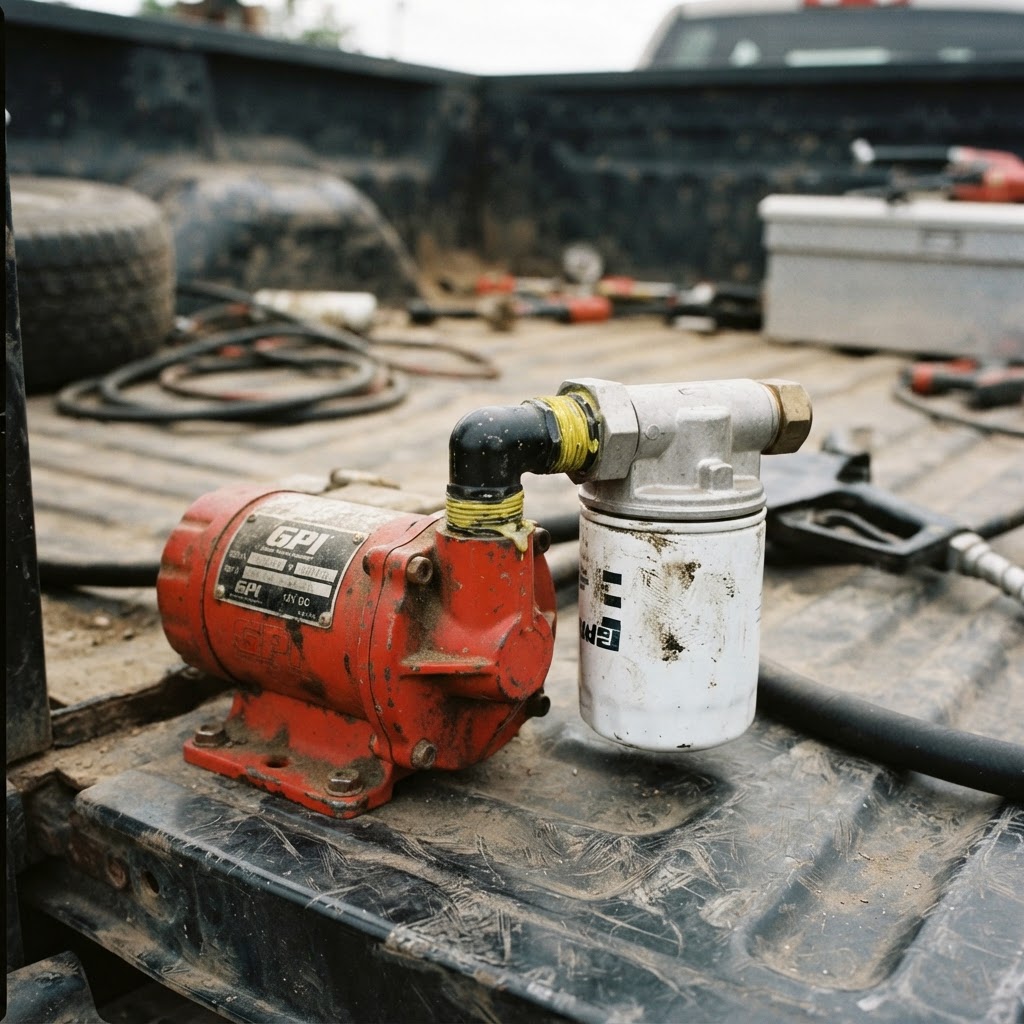
Clearance is the other big issue. You need enough room below the pump outlet to spin the canister on and off. If your pump is mounted low in the truck bed, you might need to add a 90-degree elbow or a short extension pipe to move the filter assembly into a clear space. Also, remember that a full filter canister weighs a couple of pounds and is full of liquid—ensure your pump’s discharge port is sturdy enough to support that weight under vibration.
Long-Term Durability
I’ve had one of these GPI Filter Kit setups on my personal service truck for two years. The aluminum head hasn't shown a speck of corrosion, even with all the salt they throw on the roads in the winter. The biggest wear point on any filter system is the O-ring seal. GPI uses a high-nitrile gasket that stays supple. I always rub a little clean diesel or oil on the gasket before spinning a new filter on—it prevents the gasket from bunching up and leaking.
One thing to watch for is 'filter plugging' in the winter. If you aren't using a winter blend or an anti-gel additive, the paraffin wax in the diesel will plug a 10-micron filter long before it plugs your engine’s primary filter. If your pump starts sounding strained or the flow drops to a trickle, don't blame the pump—check the filter. In a pinch, I’ve seen guys keep a spare filter in the warm cab of the truck just to get the job done on a sub-zero morning.
Pros & Cons
Pros:
- Universal Fit: The 1-inch NPT inlet/outlet makes it compatible with nearly every professional-grade transfer pump.
- Rugged Construction: The cast aluminum head resists cracking better than plastic or zinc-plated alternatives.
- High Visibility: The canister is easy to grip with a standard strap wrench, even when oily.
- Effective Filtration: 10-micron rating removes the microscopic grit that kills modern fuel injectors.
- Standardized Parts: You can find replacement GPI elements at almost any tractor supply or hardware store nationwide.
Cons:
- Flow Reduction: At 18 GPM, it is slightly slower than the 25 GPM high-flow industrial units (though plenty fast for most pickups).
- Height Requirement: Adds about 9 inches to the total height of your pump assembly, which might interfere with some tonneau covers.
- No Water Sight Glass: Unlike the GoldenRod, you can't see the water build-up; you have to rely on flow restriction as an indicator or drain the tank manually.
Our top-rated pick for this category. Available at Big League Accessories with 30-day returns and expert support.
The Verdict
Bottom line: If you are hauling fuel in a transfer tank, you are a fool if you aren't filtering it. For the money, you won't find a better balance of durability and performance than the GPI Filter Kit. It’s built for the guy who works for a living, not the guy who just wants his truck to look pretty in the driveway.
Who should buy this? Anyone running a 12V or 110V transfer pump in a work truck, especially if you're fueling Tier 4 Final engines with sensitive high-pressure common rail (HPCR) systems. The one thing to watch for? Make sure you have the clearance in your bed. If you’ve got a shallow bed or a low-profile tool box, measure twice before you buy. But once it’s on, you’ll sleep a lot better knowing you aren't pumping mud into your $80,000 rig.