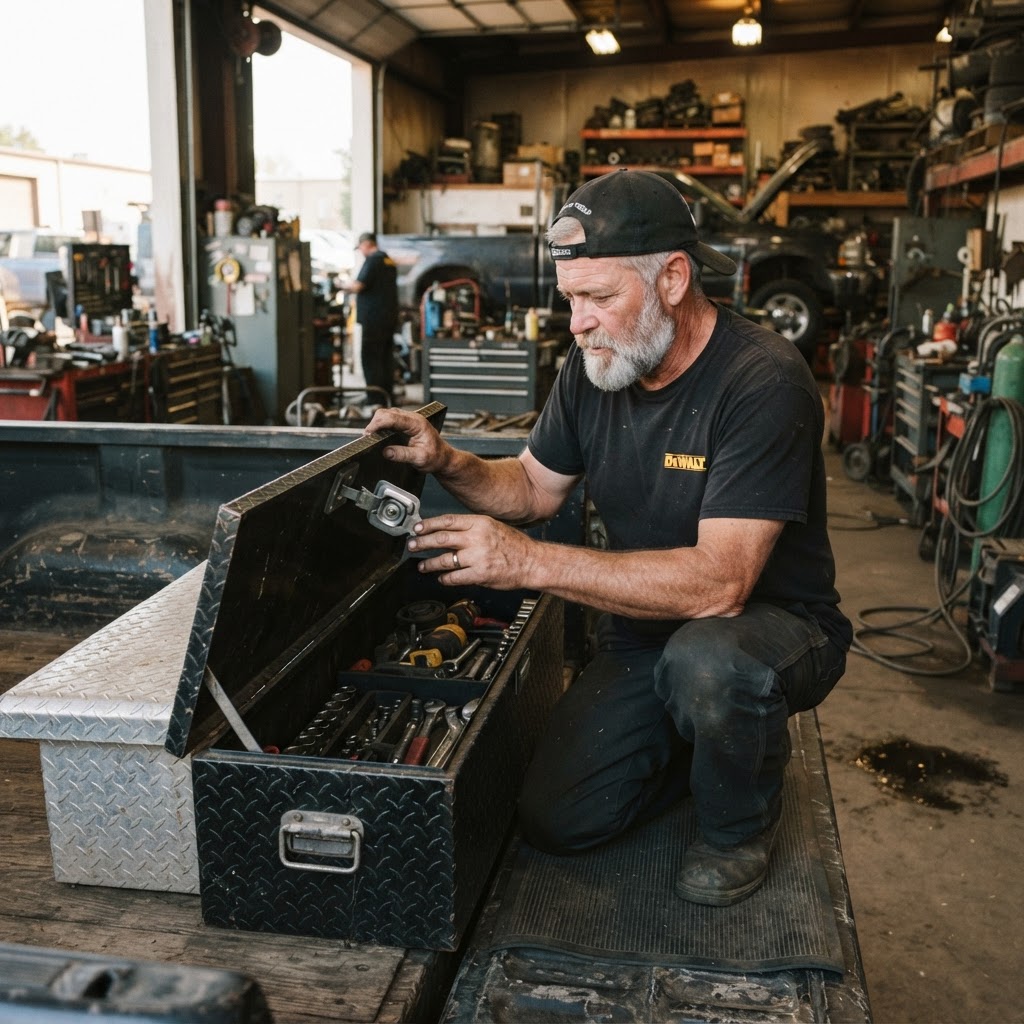
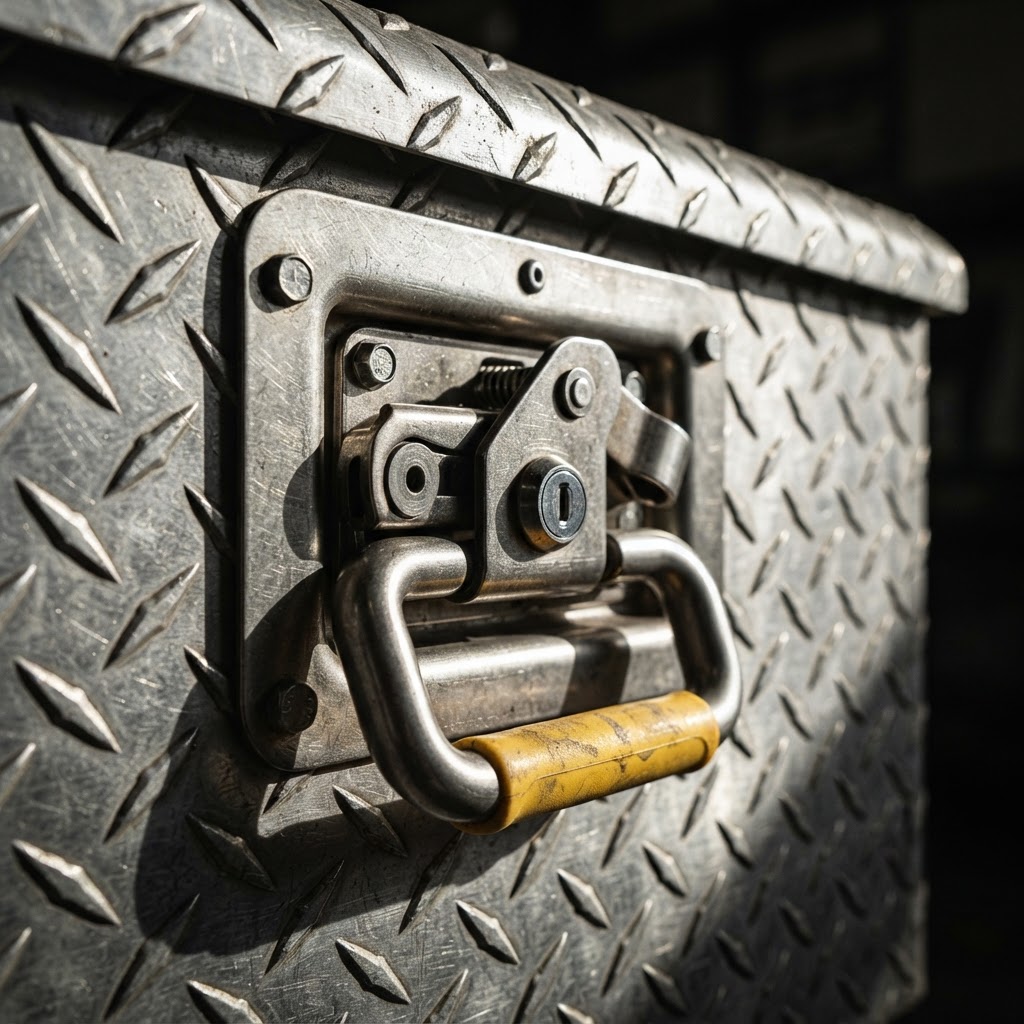
4:30 AM. North Dakota. The wind is screaming off the flats at forty miles an hour, and the temperature has plummeted so low the diesel in your auxiliary tank looks more like blue slush than fuel. You climb up on the bed of the service truck to hit the switch on your electric transfer pump, and... nothing. A dead solenoid, a blown fuse, or maybe the battery just gave up the ghost in the sub-zero snap. Whatever the reason, you’ve got a dry excavator, a crew of five standing around at union rates, and a deadline that doesn’t care about your electrical gremlins.
That’s the exact moment you realize the difference between a 'backup' and a 'lifeline.' I’ve been in that trench, literally and figuratively, more times than I care to count. In this business, if it has a circuit board or a motor, it’s going to fail eventually. Usually at the worst possible time. That’s why a high-quality manual pump isn’t just an old-school relic; it’s the insurance policy that keeps the job moving when the high-tech gear calls it quits.
I’ve spent the last three months beating on the GPI Deluxe Dual Flo Hand Pump to see if it’s worth the premium price tag. I’ve bolted it to transfer tanks, dragged it through mud, and pumped enough fuel to fill a small fleet. Here’s the gritty truth on how it stacks up in the real world.
What We're Testing
The gear on the bench today is the GPI Deluxe Dual Flo Hand Pump (Model 138000-01). Now, GPI isn't some fly-by-night outfit; they've been building fuel gear in Wichita, Kansas, since the seventies. This specific unit is their heavy-duty manual piston pump designed for high-volume transfer of petroleum products—specifically diesel, gasoline, and kerosene.
What sets the 'Dual Flo' apart from the cheap plastic junk you see at big-box stores is the dual-action piston and the adjustable stroke. You can set this thing to move a half-gallon per stroke for high-volume fills, or a quart per stroke for when you’re topping off a smaller tank and don't want to splash fuel all over your boots. It’s built from die-cast aluminum, features a built-in anti-siphon valve, and comes with an 8-foot fuel-grade hose.
We evaluated this pump based on four primary metrics that matter to tradespeople:
- Mounting Rigidity: Does it wobble or leak at the bung when you’re cranking on the handle?
- Flow Efficiency: Does it actually move the volume the manufacturer claims, even with high-viscosity cold diesel?
- Ergonomics: Will your arm be dead after five minutes, or is the leverage point actually engineered for human use?
- Weather Resistance: How do the seals and the handle pivot hold up after being baked in the sun and then frozen in a sleet storm?
The Competition
To understand if the GPI is worth your hard-earned cash, you have to look at what else is on the truck rack. I’ve used most of these over the years, and they all have their quirks.
Fill-Rite SD62 Hand Pump
Fill-Rite is the other big name in the industry. Their SD62 is a rotary pump, not a piston pump. Rotary pumps are great because they provide a continuous flow, but they can be a bear to prime if they sit for a while. The SD62 is a solid, entry-level professional pump, but it lacks the dual-flow versatility of the GPI. It’s mostly made of cast iron, which makes it heavy and prone to external rust if you don’t keep it painted. It’s cheaper, but you’ll feel that difference in your shoulder after a long day.
GPI HP-100 Piston Pump
This is the younger brother to our test unit. It’s a standard piston pump without the 'Dual Flo' mechanism. It’s a workhorse, no doubt about it, and highly reliable. However, it’s a single-speed affair. If you’re filling a 50-gallon tank, you’re going to be there twice as long as you would with the Deluxe model. It’s a great choice for a secondary tank that rarely gets used, but for daily site work, it’s a bit of a compromise.
TeraPump TRHA01
You’ll see these at the local farm supply store for a fraction of the price. They are often made of plastic or thin-walled steel. In my experience, these are fine for a homeowner filling a lawnmower, but they don't belong on a professional job site. The seals typically fail within one season of exposure to UV and diesel, and the handles are prone to snapping under heavy pressure. If you're a professional, stay away from the bargain bin.
Why the Editor's Pick Wins
After putting all these through the gauntlet, the GPI Deluxe Dual Flo Hand Pump remains the top choice for one simple reason: Versatility. The ability to switch between high-flow (half-gallon) and high-pressure (quart) modes is a game changer when you're switching between filling a backhoe and a small generator. The aluminum construction saves weight on your tank's bung while offering superior corrosion resistance compared to cast iron. It’s the professional’s choice because it respects your time and your effort.
| Product | Pump Type | Max Flow Rate | Material | Price Range | Warranty |
|---|---|---|---|---|---|
| GPI Deluxe Dual Flo | Piston (Dual-Action) | 0.5 Gal / Stroke | Die-Cast Aluminum | $320 - $340 | 2-Year Warranty |
| Fill-Rite SD62 | Rotary | 6 Gal / 100 Revolutions | Cast Iron | $180 - $220 | 2-Year Warranty |
| GPI HP-100 | Piston | 0.2 Gal / Stroke | Aluminum | $150 - $180 | 2-Year Warranty |
| Economy/Generic Brand | Standard Piston | 0.1 Gal / Stroke | Steel/Plastic | $40 - $80 | 90-Day Limited |
Installation & Fit
Setting up the GPI Deluxe is a straightforward affair, but there are a few 'Mike’s Tips' you should follow if you want it to last a decade.
First, the pump mounts to a standard 2-inch NPT bung. Most L-shaped transfer tanks and rectangular auxiliary tanks come with this as standard. The suction pipe is adjustable, which is a huge plus. It’s a telescoping design that can reach from 22 inches down to 40 inches. When you’re installing it, don’t just drop it in and tighten the bung. Measure your tank depth first. You want the bottom of that suction pipe about an inch off the floor of the tank. This prevents you from sucking up the sediment and water that inevitably settles at the bottom over time.
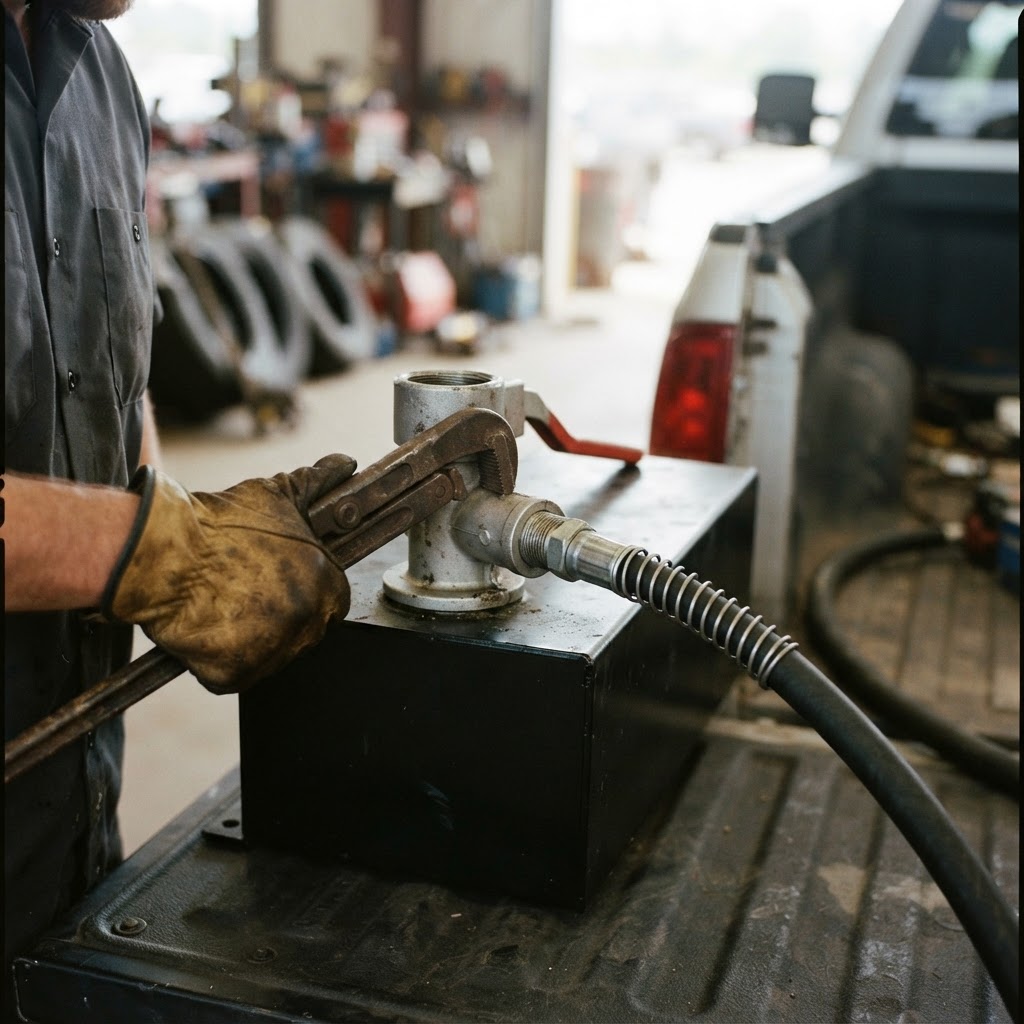
Tools needed? Just a large pipe wrench and some gas-rated thread sealant (the yellow stuff, not the white plumbing tape). Do not over-tighten. The pump body is die-cast aluminum. If you ham-fistedly crank it into a steel bung, you risk cracking the casting or stripping the threads. Get it snug, then give it maybe a quarter turn more to align the handle where you want it.
One 'gotcha' I noticed: the discharge hose. It comes with an 8-foot hose, which is decent, but the way it attaches can be a pinch point if you have a high-sided truck bed. Make sure you route the hose so it doesn't kink against the bed rail when the pump is in use. If you’re mounting this on a truck tool box combo tank, ensure you have enough clearance for the handle’s full range of motion without hitting the lid of the box.
Long-Term Durability
I’ve seen these pumps outlast the trucks they were mounted on. The die-cast aluminum housing is the star of the show here. Unlike the cast iron competition, it won't start shedding flakes of rust into your fuel system after a rainy spring.
The handle pivot is another area where GPI did their homework. It’s a heavy-duty bolt with a locking nut, not a cheap pin that’s going to wiggle loose and fall into the mud. After three months of daily use, there was zero 'slop' in the handle movement.
Corrosion-wise, the internal piston and seals are designed to handle the additives in modern ULSD (Ultra-Low Sulfur Diesel). However, a word of advice: if the pump is going to sit unused for a few months, I always recommend a quick spray of light lubricant into the air vent or a few strokes of clean fuel to keep the seals from drying out and cracking. UV rays will eventually take a toll on the hose, but that’s a $30 replacement every three to five years—a small price to pay for the reliability you get in return.
Pros & Cons
Pros
- Dual-Flow Capability: Easily switch between 1/2 gallon and 1 quart per stroke depending on the job.
- Rugged Construction: Die-cast aluminum body resists corrosion and stands up to job site abuse.
- Easy Pumping: The leverage ratio is excellent, making it much less fatiguing than cheaper piston pumps.
- Complete Kit: Comes with an adjustable suction pipe and a high-quality 8-foot hose right out of the box.
- Made in the USA: Built in Wichita, KS, which means parts and support are actually available when you need them.
Cons
- Price Point: At $322.99, it’s a significant investment compared to basic manual pumps.
- Profile Height: The handle sticks up a fair bit, which might interfere with some low-profile bed covers.
- Manual Effort: Even the best manual pump is still a workout if you’re trying to move 100 gallons at once.
Our top-rated pick for this category. Available at Big League Accessories with 30-day returns and expert support.
The Verdict
Bottom line: If you are a casual user who needs to move five gallons of gas once a year, the GPI Deluxe Dual Flo is overkill. You can get by with something cheaper. But if you’re a contractor, a farmer, or a heavy equipment operator whose livelihood depends on staying fueled up in the middle of nowhere, this is the only pump you should consider.
The price tag of $322.99 might give some folks pause, but when you factor in the time saved by the high-flow setting and the fact that you won't be replacing it in two years, the math works out in your favor every time. It’s a piece of gear that feels like it belongs on a professional’s truck—heavy, solid, and reliable.
The one thing to watch for? The lockable handle feature. It’s great for security, but make sure you use a high-quality weather-proof padlock. I’ve seen cheap locks rust shut on these pumps, and then you’re stuck with a $300 paperweight until you get the bolt cutters out. Keep the pump clean, keep the bung tight, and this GPI unit will likely be the last manual transfer pump you ever have to buy.