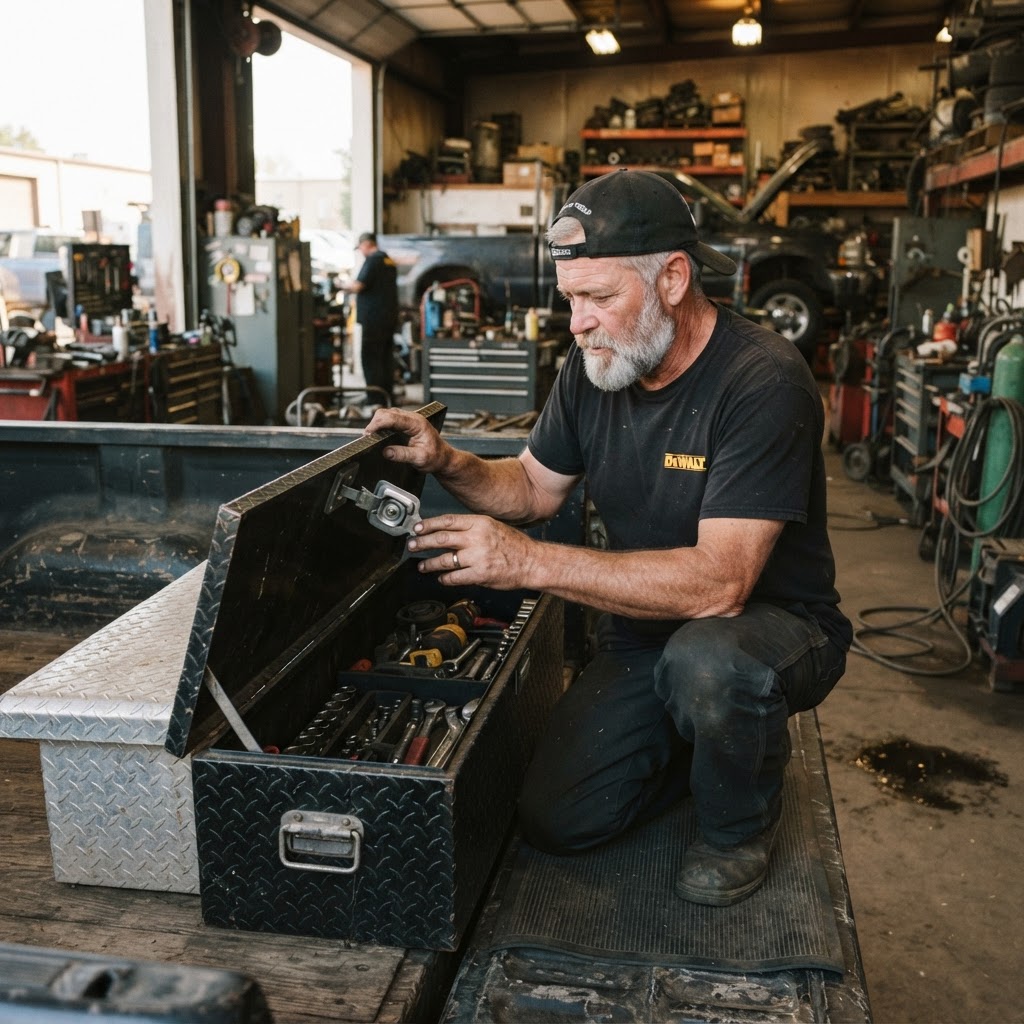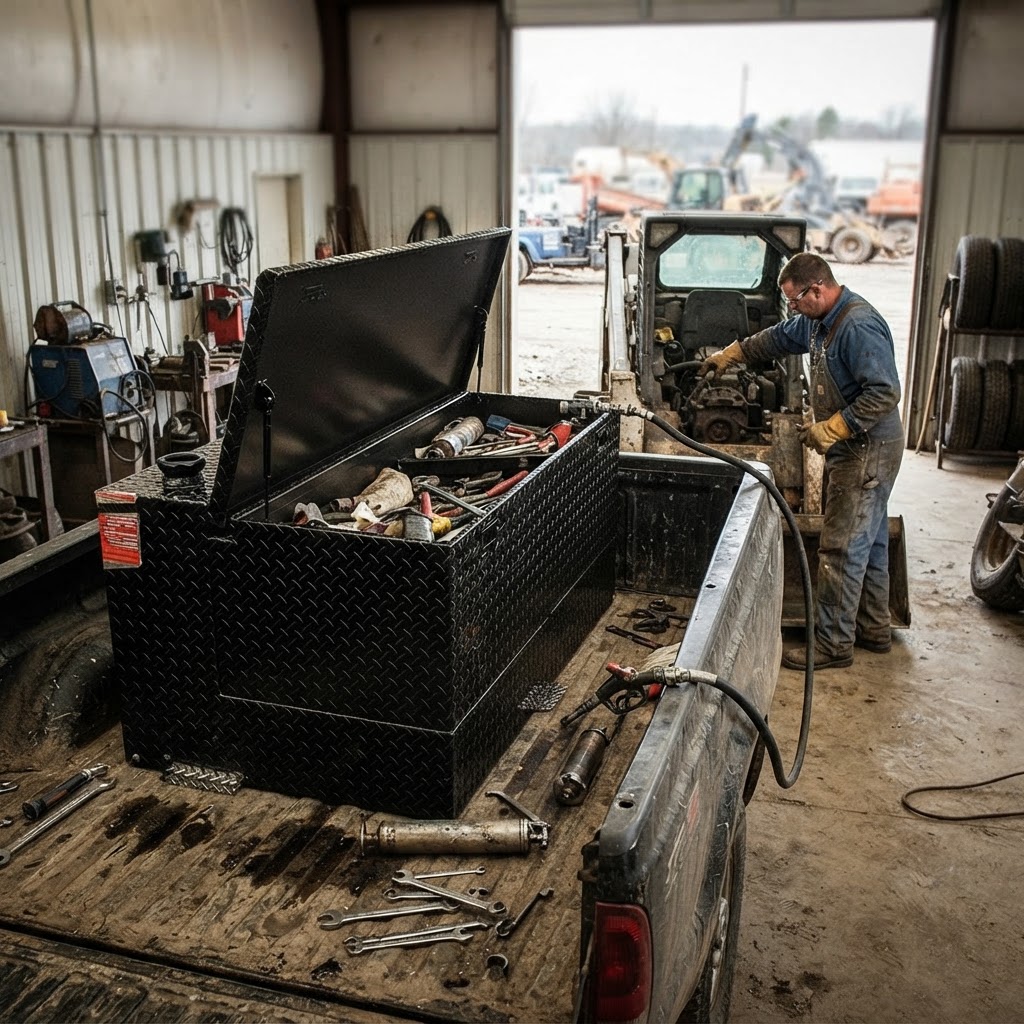
It’s 4:30 AM in the middle of a November cold snap, and the wind is howling across a job site that’s three miles from the nearest paved road. The frost is so thick on the windshield you have to scrape it with a credit card because you left your scraper in the other truck. You climb into the cab, turn the key, and pray the glow plugs do their job. The engine catches, but then you look at the fuel gauge on the skid steer sitting in the mud—it’s bone dry. Some rookie forgot to top it off at the end of the shift, and now you’re looking at a two-hour round trip to the nearest diesel pump while your crew stands around burning billable hours. That’s the exact moment you realize a transfer tank isn’t just a convenience; it’s a piece of mission-critical infrastructure. I’ve been there more times than I care to admit. I’ve spent the better part of three decades bolting gear to truck beds, and I’ve seen what happens to cheap, thin-walled tanks when they’re subjected to the constant vibration of washboard roads and the weight of a full load of diesel. If the welds aren’t perfect, they crack. If the baffles are junk, the fuel surge will push your truck through an intersection when you’re trying to stop. In this field test, we aren’t looking at shiny show-truck accessories. We’re looking at L-shape combos—the holy grail for contractors because they give you the fuel you need to keep the heavy machinery running without sacrificing the tool storage space you need for your impacts, saws, and rigging gear. We put these units through the wringer to see which ones stand up to the abuse of a real work week.
What We're Testing
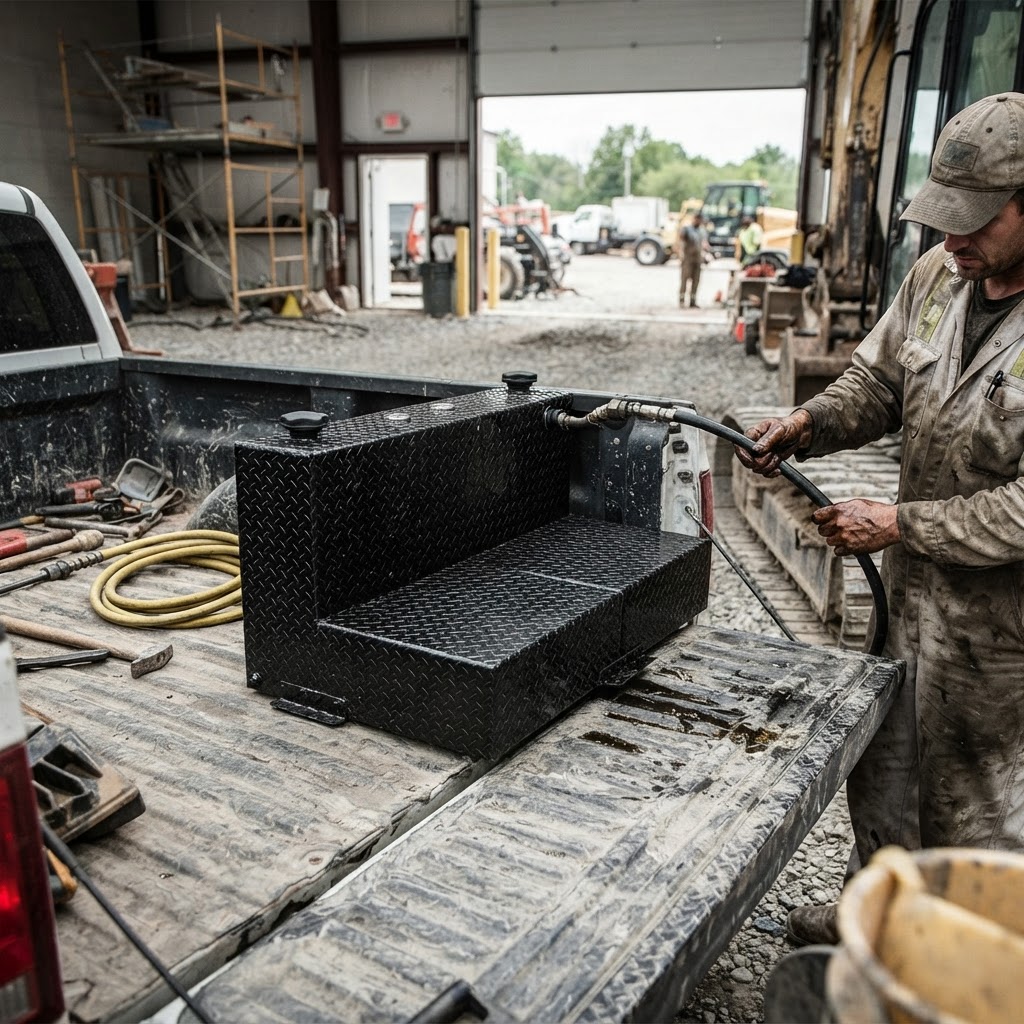
When we talk about transfer tanks, specifically the L-shape variety, we’re looking for a very specific balance of utility. These units are designed to sit low in the bed, often tucking under the rail, allowing you to mount a toolbox directly on the 'step' of the L-shape. This configuration is for the guy who needs his bed space for lumber or pipe but can't afford to be tethered to a gas station. Our evaluation criteria were simple but brutal. First, we look at Structural Integrity. How thick is the material? We’re looking for at least .125-inch aluminum or heavy-gauge steel. If it flexes when you push on it, it’s not going on my truck. Second, we look at the Baffle System. Fuel weighs roughly 7 pounds per gallon. A 50-gallon tank is carrying 350 pounds of liquid. Without internal baffles to break up the movement, that liquid becomes a battering ram every time you hit the brakes. We checked for internal reinforcement. Third, we look at the Security and Seal. For the combo units, the toolbox portion needs to be weather-tight. I don't want my expensive cordless tools sitting in a puddle of rainwater or smelling like off-road diesel. Finally, we look at the Mounting Hardware. We looked at the tabs. Are they welded solid, or are they just tacked on? We want mounts that can handle the sheer force of a fully loaded tank during a sudden stop.
The Competition
We looked at the heavy hitters in the industry to see how they stack up against our primary test unit. There are plenty of options out there, but few that get the 'combo' geometry right for a short-bed or mid-sized truck.
Weather Guard 75-Gallon L-Shape (Model 354-0-01) Weather Guard is often considered the gold standard for site security. Their steel tanks are built like tanks—literally. The 354-0-01 offers a massive 75-gallon capacity, which is great for large fleets, but it’s a beast. At roughly 200 pounds empty, you’re eating into your payload before you even add fuel. The powder coat is excellent, but once you chip it down to the raw steel, you have to stay on top of it or rust will move in. It typically retails between $1,150 and $1,250 depending on the vendor. The warranty is solid, but the weight and the footprint make it overkill for a lot of 1500-series trucks. It's a 'buy once, cry once' product, but the sheer mass of it can be a drawback for daily drivers.
Dee Zee 92 Gallon L-Shape (Steel) Dee Zee is the budget-conscious choice you’ll find at most farm and fleet stores. The capacity is huge for the price, often under $950. However, in my experience, the steel is thinner than the premium brands, and the internal baffling is minimal. I’ve seen these tanks start to weep at the corner welds after a year of heavy off-road use. If you’re mostly on pavement and on a tight budget, it works, but it’s not a 'buy it for life' piece of gear. The finish also tends to fade and chalk after a single summer in the high-altitude sun.
UWS 75 Gallon L-Shape Aluminum UWS makes a decent aluminum tank. They use a patented Foam-Filled Lid on their toolboxes which actually does a great job of preventing warping. The 75-gallon L-shape is a popular middle ground, usually priced around $1,050. My gripe with UWS is the hardware. The latches often feel a bit flimsy compared to the high-end industrial units, and I’ve had to replace more than one paddle handle after a couple of seasons of grit and grime. The aluminum is also thinner (.063 inch) than what you'll find on professional-grade ATI units.
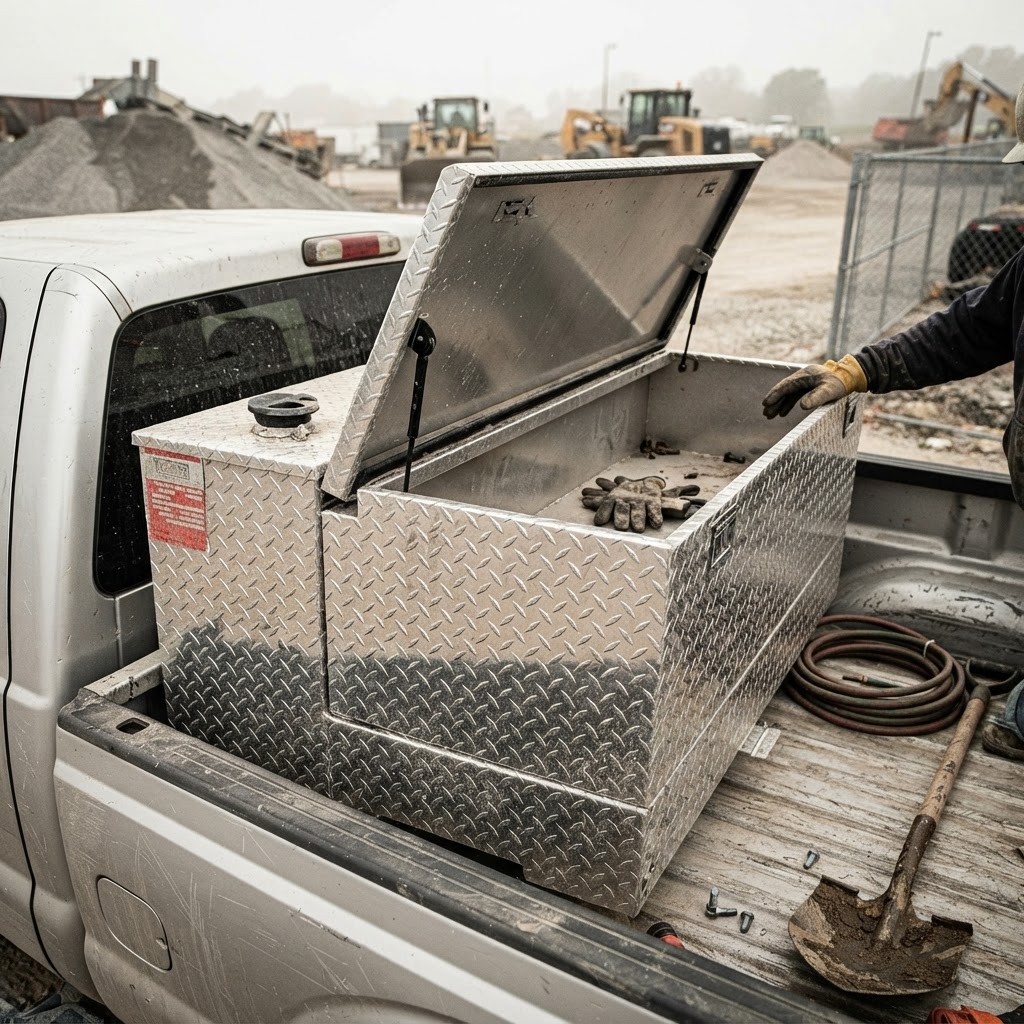
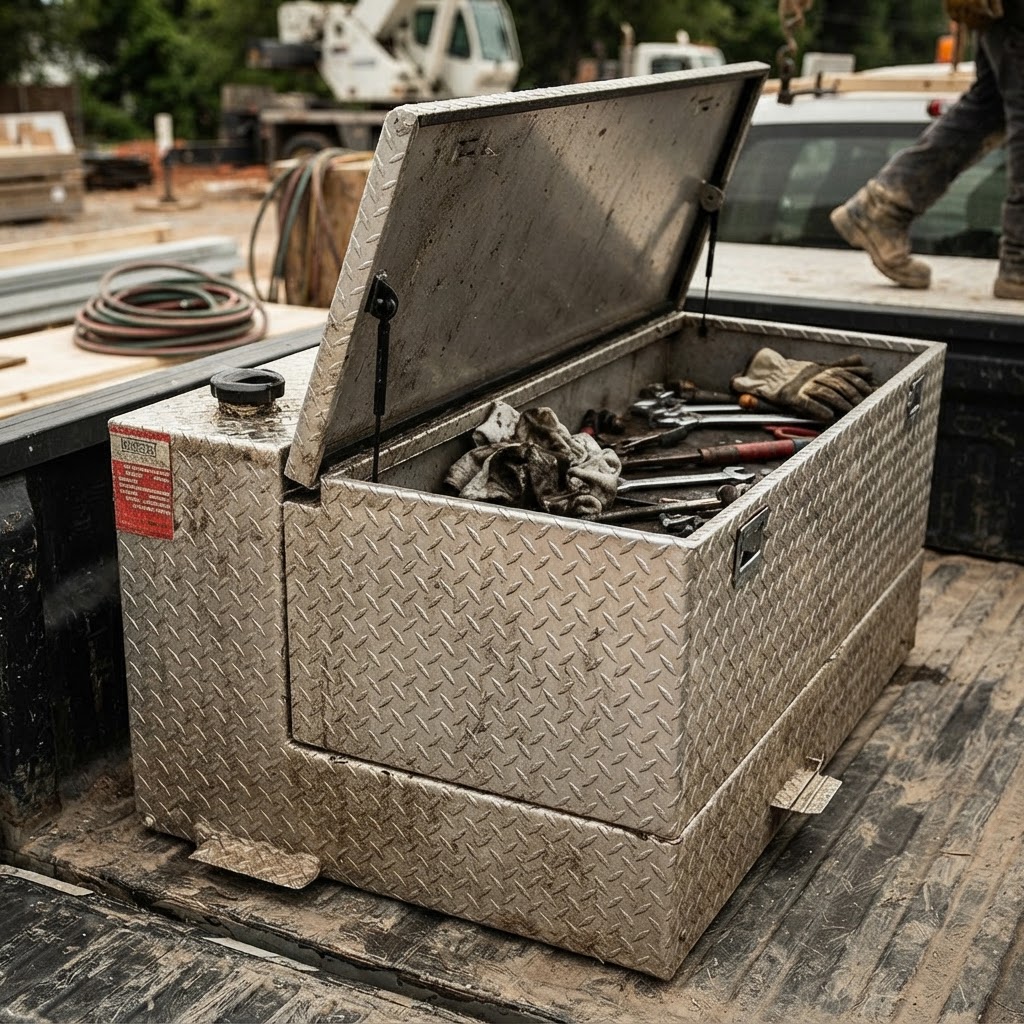
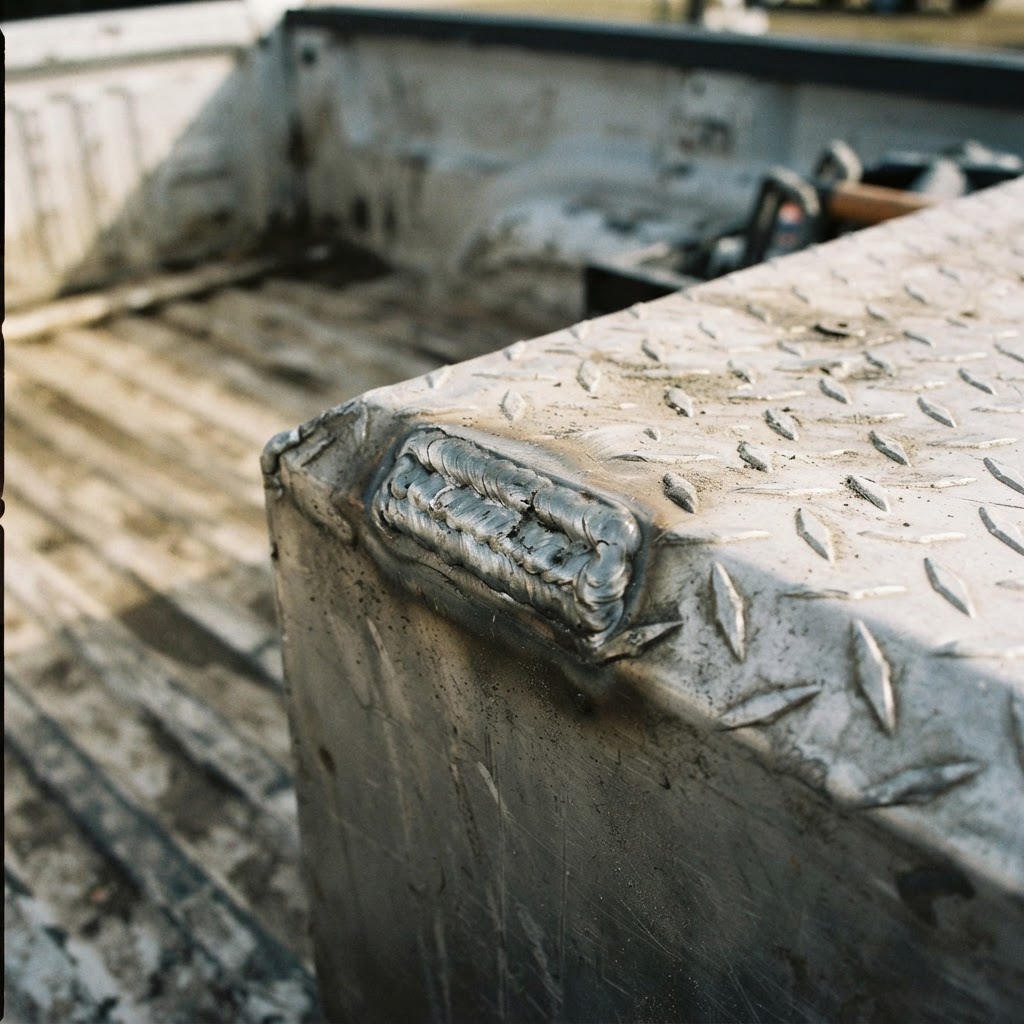
Our Top Pick: ATI 47 Gallon Silver L-Shape Transfer Tank + Toolbox Combo After running the numbers and checking the welds, the ATI 47 Gallon Silver L-Shape Transfer Tank + Toolbox Combo takes the win. While the capacity is lower than the massive 92-gallon units, 47 gallons is the sweet spot for most contractors. It’s enough to fill a skid steer twice or keep a generator running for days, without weighing down your rear suspension to the point of sagging. The reason this wins as our Editor’s Pick is the construction quality. ATI uses .125-inch marine-grade aluminum. That’s significantly thicker than the sheet metal used by the big-box brands. When you’re bouncing down a rutted-out access road, that extra thickness is what keeps the seams from splitting. Furthermore, the integration of the toolbox is seamless—it’s not just a box sitting on a tank; it’s engineered as a single, rigid unit. For a professional-grade setup, you can check their full range of truck tool boxes to see how they integrate with different setups.
| Product | Capacity | Material | Price Range | Warranty/Notes |
|---|---|---|---|---|
| ATI 47 Gallon L-Shape Combo | 47 Gallons | .125 Aluminum | ~$1,168.99 | 1-Year / Best-in-class welds |
| Weather Guard 354-0-01 | 75 Gallons | 14-Gauge Steel | ~$1,150 - $1,250 | Limited Lifetime / Very Heavy |
| Dee Zee 92 Gallon L-Shape | 92 Gallons | Alloy Steel | ~$850 - $950 | 3-Year / Budget friendly, rust prone |
| UWS 75 Gallon L-Shape | 75 Gallons | .063 Aluminum | ~$1,000 - $1,100 | 1-Year / Foam-filled lid |
Installation & Fit
Don’t let the four bolts fool you—installing a transfer tank correctly takes precision. You’re mounting a heavy, flammable-liquid-carrying vessel to a vehicle that moves at highway speeds. First, check your bed liner. If you have a drop-in plastic liner, you’re going to want to cut out the sections where the mounting tabs sit. You want metal-on-metal contact (with a rubber isolator in between). If you mount over plastic, the plastic will eventually compress, the bolts will loosen, and the tank will start to slide. For tools, you'll need a power drill with cobalt bits (aluminum is easy, but your truck frame isn't), Grade 8 mounting hardware (don't use the cheap zinc stuff from the bin), a helper (you can't hold the nut under the bed while turning the bolt from the top), and Blue Loctite. The ATI 47 Gallon Silver L-Shape Transfer Tank + Toolbox Combo is designed to fit most full-size trucks, but pay attention to your bed height. If you have a shallow-bed truck, the toolbox might sit slightly above the rails. On a standard F-150 or Silverado, it usually sits flush or just below, which is ideal if you plan on running a tonneau cover. Always measure the distance between your wheel wells—this unit is 48.5 inches long, which fits perfectly between the humps of a standard full-size bed.
Long-Term Durability
I’ve seen a lot of gear look great in the showroom and like garbage after one winter in the Rust Belt. Because the ATI is aluminum, you don’t have to worry about the tank rusting from the inside out due to water condensation in the diesel. However, you do need to watch out for galvanic corrosion. When you bolt aluminum to a steel truck bed, the two metals don't like each other. Use the rubber mounting pads provided or grab some heavy-duty rubber matting to create a barrier. Vibration is the silent killer. A full tank is heavy and constant vibration can fatigue the mounting tabs. I recommend checking your mounting bolts every time you change your oil. If they’re loose, the tank will vibrate, and that’s when you get stress cracks in the aluminum. The gas struts on the ATI toolbox lid are automotive grade, which is a relief. I’ve dealt with cheap lids that slam shut on your fingers when the temperature drops below freezing. These hold up. The weather stripping is a high-density EPDM rubber that doesn't go brittle after a summer in the sun.
Pros & Cons
Pros
- .125 Gauge Aluminum: Heavy-duty construction that resists cracking and handles the weight of full fuel loads without bowing.
- Space Efficient: The L-shape design allows for full use of the bed floor for long items like 4x8 sheets or ladders.
- Fully Baffled: Reduces fuel slosh, which significantly improves vehicle handling and braking safety.
- Corrosion Resistant: Aluminum won’t rust, making it ideal for wet climates or coastal areas.
- Integrated Storage: The toolbox keeps your primary tools organized and out of the cab.
Cons
- Price Point: At $1,168.99, it is a significant investment compared to basic steel tanks.
- Lower Capacity: 47 gallons might be small for crews running multiple pieces of large heavy equipment all day.
- Install Complexity: Requires drilling into the truck bed, which some owners of newer trucks may be hesitant to do.
Our top-rated pick for this category. Available at Big League Accessories with 30-day returns and expert support.
The Verdict
If you are a solo contractor, a mobile mechanic, or a farmer who needs to keep a couple of machines running, the ATI 47 Gallon L-Shape is the best move you can make for your truck. It solves two problems at once: fuel logistics and tool security. Yes, you can find cheaper tanks. You can find bigger tanks. But you will struggle to find a tank that is built this well for this specific price point. It’s the 'Goldilocks' of transfer tanks—not so big that it ruins your truck’s handling, but tough enough to outlast the truck you bolt it into. The one thing to watch for: Make sure your fuel pump (sold separately) is compatible with the 2-inch NPT bung on the tank. I’ve seen guys try to force a pump with the wrong threading and gall the aluminum threads. Take your time, use some pipe sealant, and do it right the first time. You’ll thank yourself when you’re out on that job site at 4 AM and the fuel is flowing exactly where it needs to go.