It’s 5:30 AM in the high desert of Nevada, the kind of cold that bites right through your Carhartt jacket. We’ve got three excavators, two skid steers, and a lighting plant that all need fuel before the sun even finishes rising. The nearest diesel pump is forty miles of washboard dirt road away. Last year, I watched a greenhorn try to manage this with a dozen five-gallon plastic jugs stacked in the back of his Sierra. By the third day, the bed of his truck smelled like a refinery, two of the nozzles were cracked, and his back was shot from hoisting seventy-pound cans over his head.
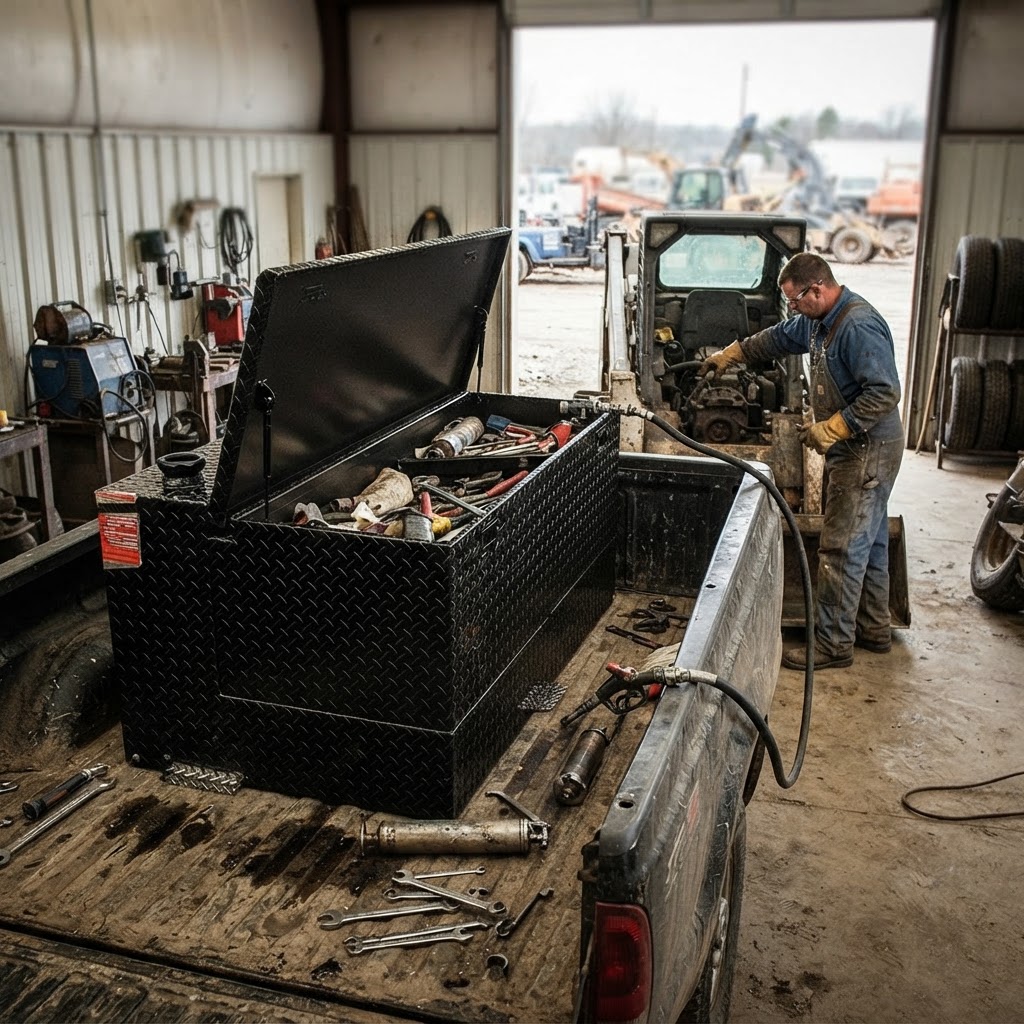
That’s the exact moment you realize a transfer tank isn't a luxury; it’s a piece of professional equipment. When you’re running a crew, time is the only currency that matters. If your machines are sitting idle because you’re chasing a gas station, you’re losing money. A real transfer tank turns your pickup into a mobile filling station, keeping the iron moving and the payroll productive. I’ve spent twenty years bolting these things into everything from beat-up F-150s to brand-new Ram 3500s, and I’ve seen which ones hold up to the vibration and which ones crack at the seams after six months of gravel roads.
In this guide, we aren't looking at the cheap, thin-gauge boxes you find at the big-box clearance aisles. We’re talking about heavy-duty, baffled, DOT-compliant hardware designed to live in the bed of a working man’s truck. We’re going to look at installation hurdles, the reality of long-term corrosion, and why the shape of your tank matters more than you think when you’re trying to haul a full load of lumber alongside it.
What We're Testing
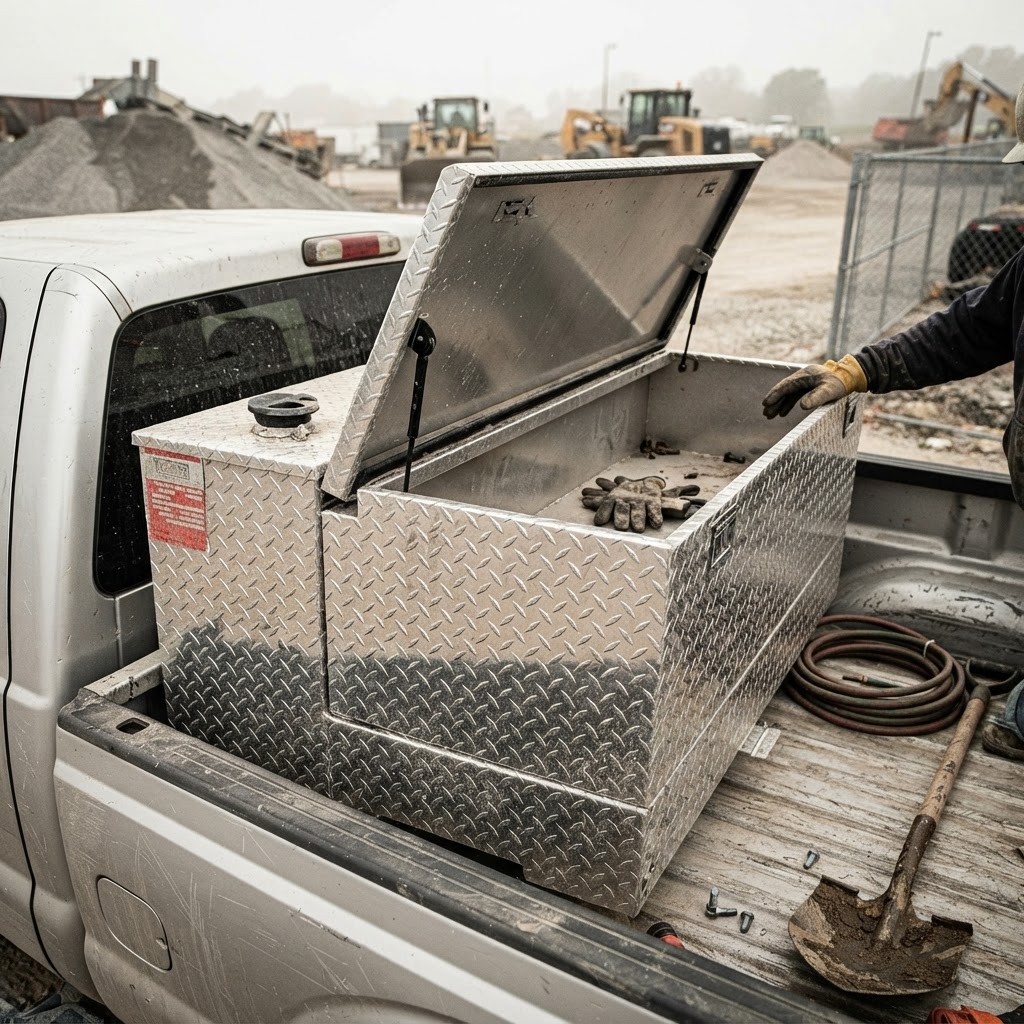
When we talk about transfer tanks, we are looking at auxiliary containers designed to transport non-flammable liquids—mostly diesel fuel, water, or specialized fertilizers—from point A to point B. For this evaluation, I focused on the 'Rectangle' style tanks. Why? Because they offer the best balance between capacity and bed space. We aren't testing those massive L-shaped tanks that take up half the bed today; we’re looking at the slim-profile units that let you keep your bed floor usable.
Our evaluation criteria are simple because the job is simple: it has to stay put, it has to stay sealed, and it has to withstand the elements. We evaluated these units based on four primary pillars:
- Mounting Integrity: Does the tank come with reinforced tabs that won't shear off under the weight of 400+ pounds of fuel sloshing around?
- Load Management: Does it have internal baffles? Without them, the 'hammer' effect of fuel hitting the side walls during a sudden stop can actually move your truck or, worse, split a weld.
- Weather Resistance: We looked at powder coat thickness and the quality of the fill cap seals. I want to know if my diesel is going to be contaminated by rainwater after a week of storms.
- Daily Utility: How much room is left for a fifth-wheel hitch or a stack of plywood? Can I still reach the drain plug if I need to clean the tank out?
The Competition
The market is flooded with options, but for the serious contractor, only a few brands actually make the cut. First, you’ve got Weather Guard. Their Model 354-0-01 is a vertical steel tank that’s built like a tank—literally. It’s heavy, coming in at over 150 lbs empty, and finished in a thick white or black gloss. While steel is incredibly impact-resistant, you’re always fighting the clock against internal rust if you don't keep it full. They usually run between $950 and $1,150, backed by a solid 3-year warranty.
Then there’s Dee Zee. Their Specialty Series, specifically the 92-gallon L-shaped aluminum models, are the go-to for guys who need massive volume on a budget. You can usually find these for around $900. They use a thinner .056-inch aluminum compared to premium brands, which saves weight but makes them more prone to denting if a rogue tool chest slides into them. Their warranty is decent, but I’ve seen the welds weep on these if they aren't mounted perfectly flat.
UWS is another heavy hitter. Their 50-gallon 'Hammerhead' style tanks are popular because they narrow at the bottom to fit between wheel wells. They use a standard diamond plate aluminum finish. They are priced competitively around $700, but they lack the heavy-duty internal baffling systems found in higher-end units, meaning you’ll feel that fuel moving when you hit the brakes.
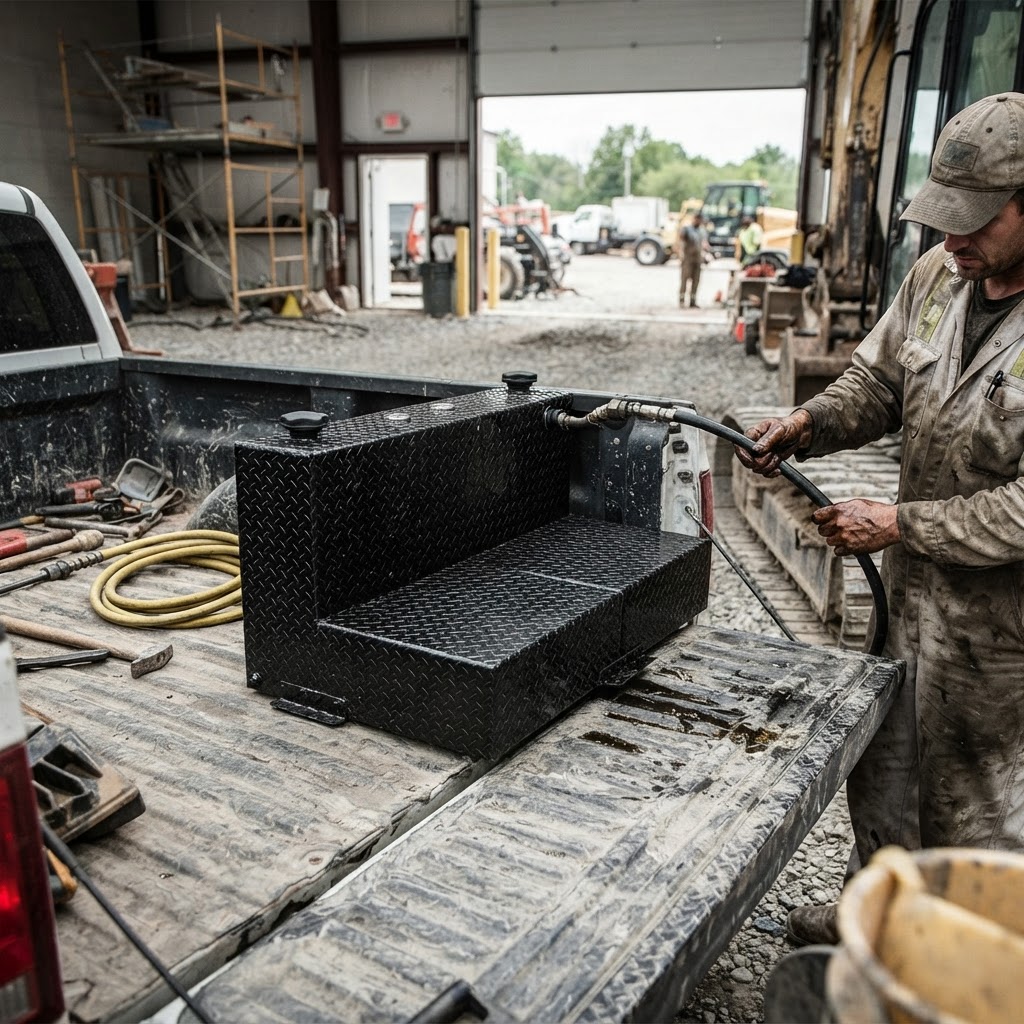
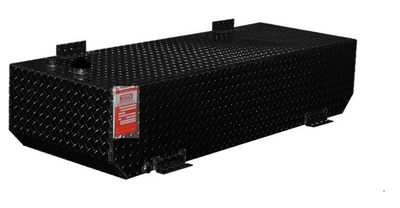
After dragging these through the mud, our Editor's Pick is the ATI 62 Gallon Black Rectangle Transfer Tank. Here is why: it uses .125 gauge marine-grade aluminum. That is twice as thick as the entry-level stuff. It’s heavy enough to take a beating but light enough that you aren't sacrificing your payload capacity just to carry the tank itself. Plus, the black powder coat is professional—it doesn't scream 'fuel thief' the way a shiny diamond plate tank does.
| Product | Capacity | Material / Gauge | Price Range | Warranty / Key Feature |
|---|---|---|---|---|
| ATI Rectangle (TTR65) | 62 Gallons | .125 Gauge Aluminum | $1,075.99 | Limited Lifetime / Internal Baffles |
| Weather Guard 354-0-01 | 50 Gallons | 14-Gauge Steel | $950 - $1,100 | 3-Year / High-Strength Steel |
| Dee Zee Specialty L-Shape | 92 Gallons | .056 Gauge Aluminum | $850 - $950 | Limited Lifetime / High Capacity |
| UWS Hammerhead (TT-50) | 50 Gallons | .063 Gauge Aluminum | $650 - $750 | 1-Year / Narrow Base Fitment |
Installation & Fit
Installing a transfer tank like the ATI 62 Gallon Black Rectangle Transfer Tank is a two-man job, not because it's heavy, but because you need to be precise. This specific model measures 48.5 inches long, which fits perfectly between the wheel wells of every full-size domestic truck (Ford, Chevy, Ram).
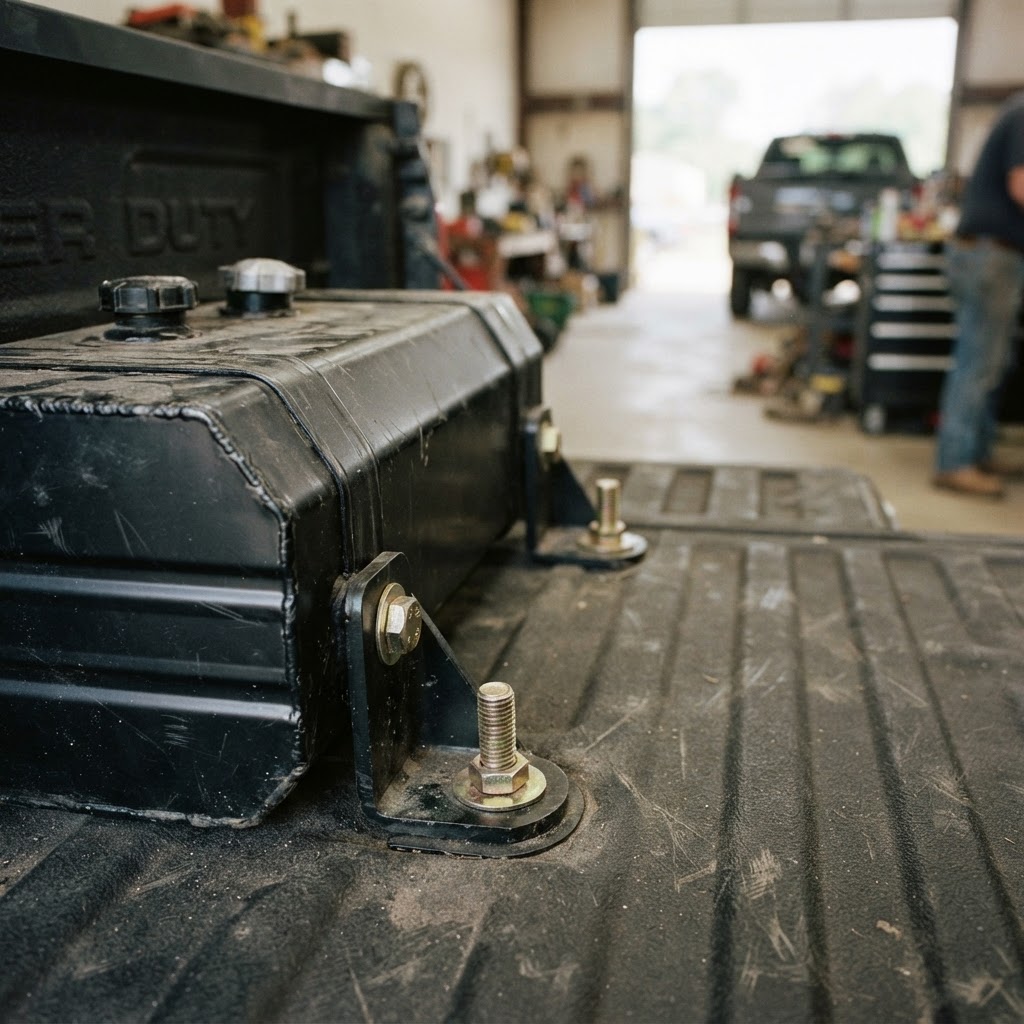
The 'Gotcha' Moment: Before you drill, check your underside. I’ve seen guys put a self-tapper right through their wiring harness or, God forbid, the main fuel tank. You want to use the included mounting tabs, but don't just use sheet metal screws. Use Grade 5 or Grade 8 bolts with large fender washers on the underside to distribute the load. Remember, 62 gallons of diesel weighs about 430 lbs. In a front-end collision, you do NOT want 500 lbs of metal and fuel flying through your rear window.
Tools Needed:
- Power drill with cobalt bits (aluminum is soft, but you’re going through the steel bed floor).
- Ratchet set and open-end wrenches.
- Thread sealant (Teflon tape won't cut it for diesel; use a dedicated fuel-resistant pipe dope like RectorSeal Tru-Blu).
- A helper to hold the nuts on the underside while you tighten from the top.
Fitment Note: The fill neck adds about 2 inches to the height. If you have a tonneau cover, measure your clearance carefully. This tank sits at 24 inches high; most modern truck beds are deep enough to accommodate it, but some older mid-size trucks or those with low-profile covers might have an issue.
Long-Term Durability
I’ve had an ATI tank in my personal rig for three seasons now. Here is what I’ve learned. First, the black powder coat is tougher than it looks, but it isn't invincible. If you toss chains or binders against it, you’ll eventually see silver peeking through. I recommend a quick hit of black Rust-Oleum for touch-ups to keep the oxidation away.
Vibration is the Enemy: Aluminum is great because it doesn't rust, but it can work-harden and crack if it’s allowed to vibrate. This is why those internal baffles are critical. They don't just stop sloshing; they act as internal structural ribs. After a year of driving washboard roads, check your mounting bolts. They will loosen up. I use blue Loctite on every install now because a vibrating tank is a tank that’s going to fail at the seams.
The Venting Issue: Cheap tanks often have poor venting. In the heat of July, diesel expands. If your vent is clogged or poorly designed, the tank will 'bloat.' The ATI units use a high-quality vent/cap combo that handles pressure changes well. Just make sure you aren't blocking that vent with gear or a tarp.
Pros & Cons
The Upside
- Superior Material: The .125 gauge aluminum is the gold standard for durability without the weight of steel.
- Internal Baffling: Significant reduction in 'load surge' during braking and cornering.
- Space Efficient: The 11-inch width means you can still fit a full-size toolbox or large equipment behind it.
- Made in USA: Welds are consistent, and the quality control is visible in the corner joins.
The Downside
- Premium Pricing: At over $1,000, it’s an investment compared to basic steel units.
- Height Profile: At 24 inches, it may peek above the bed rails on some shorter-bed trucks, affecting visibility slightly.
- Pump Not Included: You’ll need to budget another $300-$500 for a quality 12V transfer pump and hose kit.
Our top-rated pick for this category. Available at Big League Accessories with 30-day returns and expert support.
The Verdict
Bottom line: If you’re a weekend warrior who just wants to fill up his lawnmower once a month, this is overkill. Buy a couple of plastic cans and save your money. But if you’re a professional—a farmer, a contractor, or a heavy equipment op—the ATI 62 Gallon Black Rectangle Transfer Tank is the best way to secure your fuel supply. It’s built to a higher standard than the competition, and the narrow footprint is a lifesaver for bed organization.
One thing to watch for: Always verify your local and state regulations regarding 'Transfer Tanks' vs. 'Auxiliary Tanks.' Transfer tanks are for filling other equipment; auxiliary tanks are plumbed directly into your truck's engine. This unit is a transfer tank. Don't try to DIY a fuel line into your truck's fuel rail unless you want a massive headache with the DOT and your engine warranty. Stick to the pump and nozzle, and this tank will serve you for the life of your truck and likely the next one, too.
For more storage solutions, check out our full range of Truck Tool Boxes.