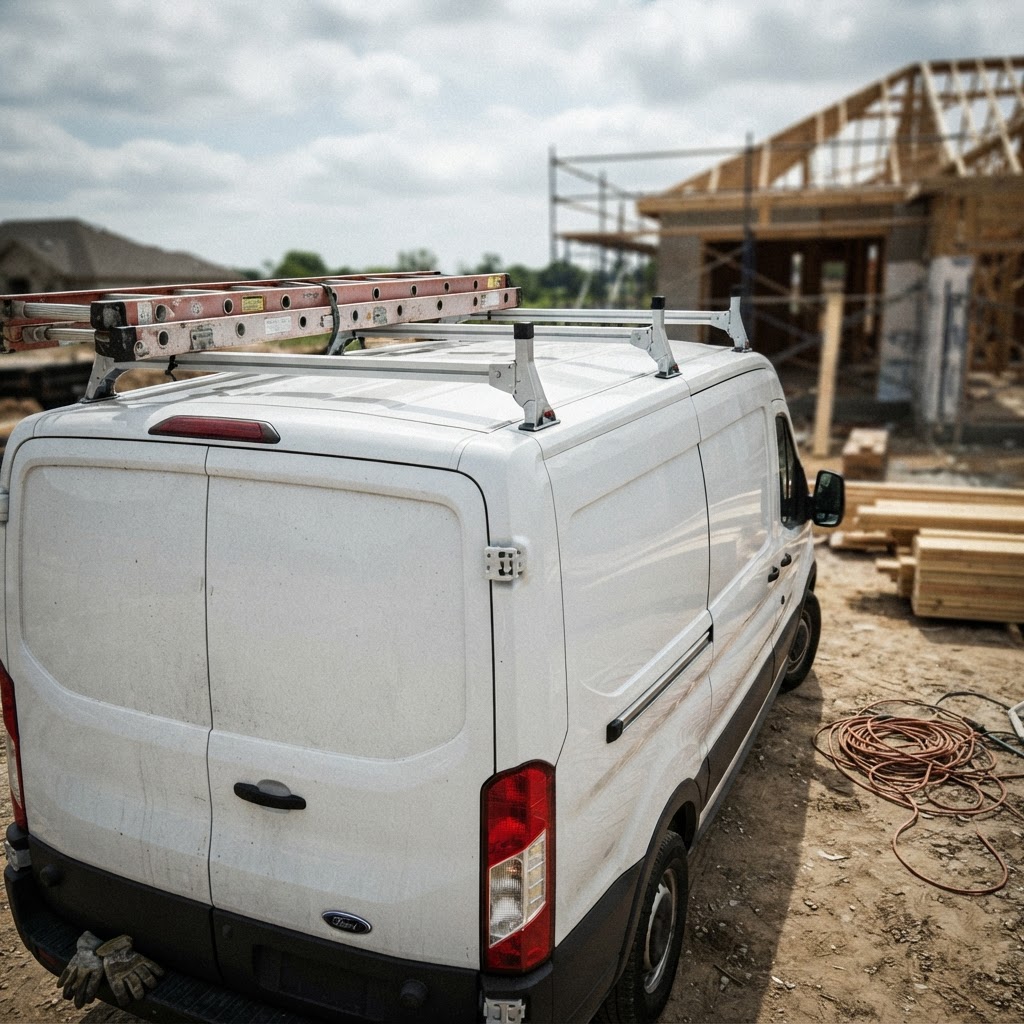
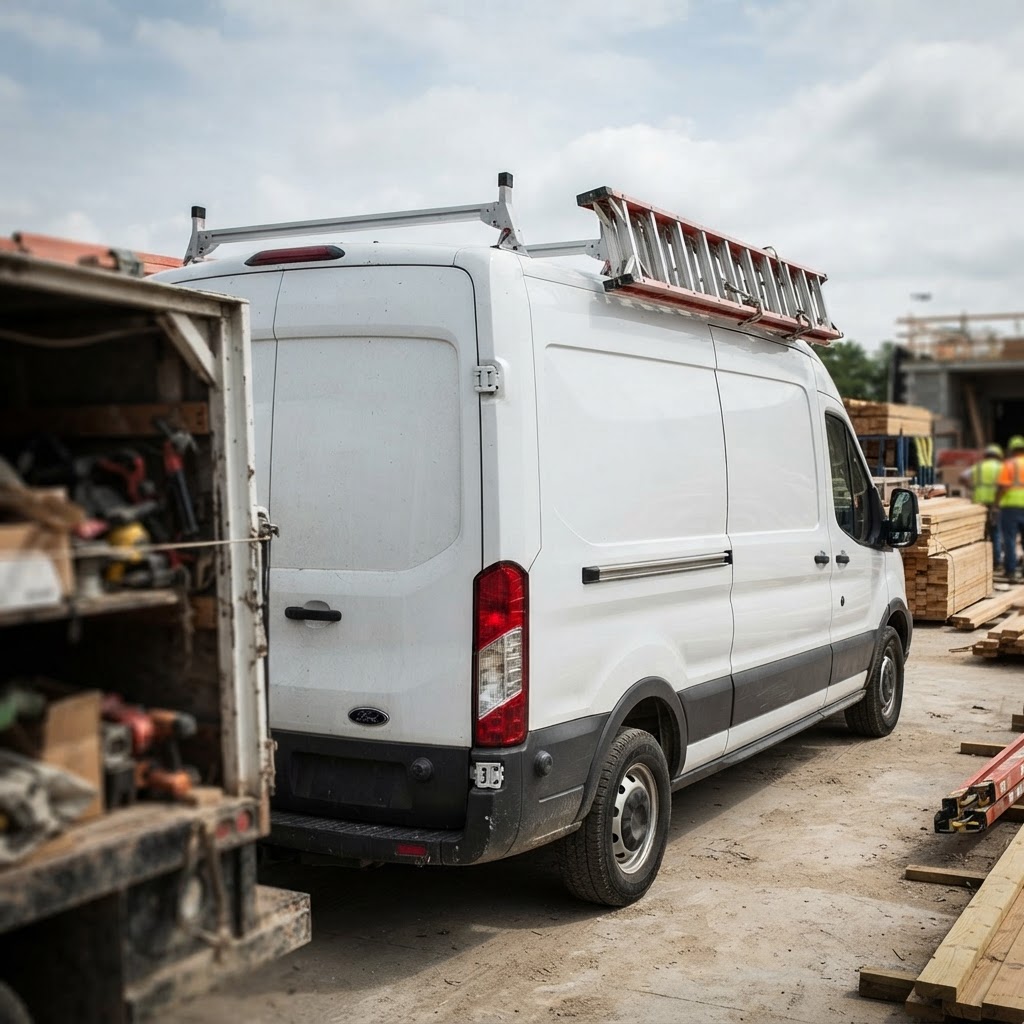
It was 6:00 AM on a job site in Jersey, the kind of morning where the rain feels like it’s trying to punch through your Carhartt and the wind is whipping off the Atlantic just enough to make every movement a chore. I was watching a greenhorn try to wrestle a 28-foot fiberglass extension ladder off a cheap, universal-fit rack he’d bought at a big-box store. The rack groaned, the van’s sheet metal flexed in a way that made me wince, and the ladder eventually came down—along with a chunk of the rack’s plastic end cap. That’s the moment you realize that 'saving money' on van gear usually costs you double in the long run.
If you’re running a Ford Transit, you aren't just driving a van; you’re driving a mobile workshop. And if that workshop can’t safely carry the long stuff—ladders, conduit, 4x4s—you’re leaving money on the table. I’ve spent the last fifteen years bolting, loading, and occasionally breaking van accessories, and I’ve learned one hard truth: the connection between your gear and your roof is the most important six inches of your entire build. If that connection is weak, your whole operation is a liability.
That brings us to the gear on the bench today. We’re looking at a system designed specifically for the Transit, built to handle the vibration of washboard backroads and the constant stress of heavy loads. This isn't a 'one size fits most' solution that rattles itself apart by the second oil change. This is about professional-grade utility that respects the engineering of the vehicle it’s mounted to.
What We're Testing
We are putting the Vantech H1 Ladder Roof Rack for Ford Transit Cargo Van 2015-On - Silver through the ringer. This isn't a light-duty hobbyist rack. The H1 system is a steel-based beast designed for the 2015-present Ford Transit cargo vans. We evaluated this rack based on four critical pillars: mounting integrity, load distribution, weather resistance, and daily ergonomics.
First, we looked at the mount. The H1 uses an extra-wide 8" x 2" base. In the world of van racks, surface area is your best friend. A wider base spreads the load across the roof channel, preventing the 'oil-canning' effect where the roof metal starts to fatigue and pop. We also looked at the material—14-gauge heavy-duty steel. While aluminum is great for weight savings, steel offers a rigidity that you can feel when you’re cinching down a heavy load.
Our evaluation involved a three-month field test. We loaded it to its rated capacity, drove it through high-wind corridors to check for the dreaded 'van whistle,' and left it exposed to the salt-heavy air of the coast to see if the silver powder coat was just for show. We also paid close attention to the 'Bar Guard' system—a non-slip plastic layer on top of the crossbars designed to protect both the rack and your ladders from the constant metal-on-metal grinding that kills most racks.
The Competition
When you’re outfitting a Transit, you’ve got a few ways to go. On the high end, you have the Weather Guard EZGLIDE2. It’s a beautiful piece of engineering, mostly aluminum, and features a drop-down mechanism that brings the ladder to you. It’s a back-saver, no doubt, but you’re going to pay for it—often upwards of $1,900. For a fleet of ten vans, that’s a massive capital outlay. If you aren't loading and unloading twenty times a day, the complexity of the drop-down mechanism is just one more thing to maintain and lubricate.
On the budget side, you’ll see brands like Buyers Products or Melipron offering universal steel racks. Buyers Products has a solid universal white steel rack (Model 1501310) that usually sits around the $250-$300 mark. It’s got a 600 lb capacity, which sounds great on paper, but because it’s universal, the fitment is never quite 'factory.' You’ll spend more time fiddling with brackets and worrying about the seal than you would with a vehicle-specific kit.
Then there’s the VEVOR and Melipron options you find on Amazon. They claim 800 lb capacities and low prices, but the finish quality is hit-or-miss. I’ve seen the powder coating on those budget racks flake off within six months, leading to rust streaks running down the side of a clean white van.
After comparing the field, the Vantech H1 stands out as the Editor’s Pick. It hits the sweet spot between the 'over-engineered and overpriced' drop-down systems and the 'cheap and flimsy' universal racks. You get a vehicle-specific fit that uses the Transit’s factory mounting points, a heavy-duty steel build that won't flex under a full load of lumber, and a price point that makes sense for a working professional. It’s the rack I’d put on my own rig because I know it’ll still be there, solid as a rock, when the van hits 200,000 miles.
| Product | Capacity | Material | Price Range | Warranty/Notes |
|---|---|---|---|---|
| Vantech H1 (Ford Transit) | 250 lbs per bar | 14-Gauge Steel | $829.00 | Vehicle-specific; No-drill install |
| Weather Guard EZGLIDE2 | 500 lbs total | Aluminum | $1,900 - $2,100 | Drop-down mechanism; Lightweight |
| Buyers Products Universal | 600 lbs total | Powder Coated Steel | $250 - $350 | Universal fit; May require adjustment |
| Melipron Cargo Rack | 800 lbs total | Alloy Steel | $280 - $320 | Budget option; Finish durability varies |
Installation & Fit
Let’s talk about the install, because this is where the Vantech H1 really earns its keep. If you’ve ever spent a Saturday afternoon drilling holes into the roof of a $50,000 van, you know the stress. One slip of the bit and you’ve got a permanent leak or a damaged headliner. The H1 system for the Ford Transit is a no-drill installation. It utilizes the factory mounting points already engineered into the Transit’s roof channels.
The hardware quality is top-tier. You aren't getting Grade 2 butter-bolts here; the fasteners are robust and the mounting uprights are welded completely onto the base for a total seal. One 'gotcha' for the Transit: the roof height varies. Whether you have the low, medium, or high roof, you need to ensure your upright height (10.5" on this model) provides enough clearance for the ladder tips to clear the rear of the van without hitting the roof's curve.
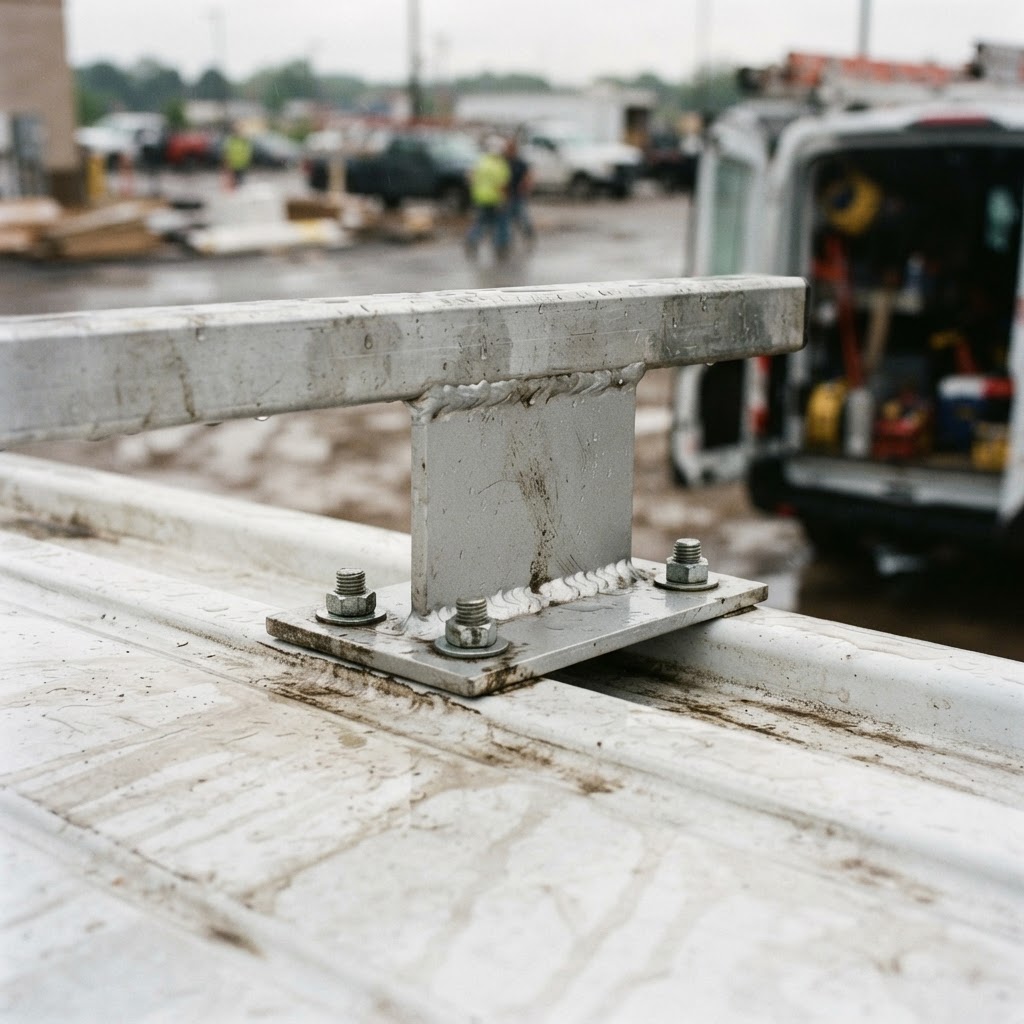
Total install time for a two-bar system is about 45 minutes if you have a helper to steady the bars while you torque the bolts. You’ll need a basic socket set and a ladder (ironically). A pro tip: apply a small bead of marine-grade silicone around the factory mounting holes before you set the bases down. Even though Vantech includes rubber gaskets and caps to prevent leakage, that extra layer of protection is cheap insurance against the 'drip-drip-drip' on your dashboard three years down the road.
Long-Term Durability
I’ve seen racks that look great in the showroom but turn into a rattling mess after a season of real work. The H1 avoids this through sheer mass. The 14-gauge steel crossbars (2" x 1" rectangular) don't have the 'singing' vibration that round bars often do at highway speeds. Vantech also includes rubber caps for the upright posts, which is a small detail that makes a huge difference in wind noise and preventing internal corrosion.
Over a year of use, the most common failure point on van racks is the finish. Ladders are made of aluminum or fiberglass, and they act like sandpaper every time you slide them on or off. The H1’s Bar Guard—that plastic strip on top of the crossbar—is the unsung hero here. It takes the abuse so the steel doesn't. If you manage to scratch through the powder coat, hit it with some cold galvanizing spray immediately. Steel is strong, but it’s not magic; if you let rust start in a salt-belt state, it’ll eat the rack from the inside out.
The eyehooks (four per upright) are another high-wear item. On cheaper racks, these are often just thin loops of wire. On the H1, they are 3/4" eyehooks integrated into the design. I’ve used them to cinch down everything from extension ladders to bundles of PVC pipe with heavy-duty ratchets, and I haven't seen a single one bend or pull.
Pros & Cons
- Pro: Vehicle-Specific Engineering – Mounts directly to Ford Transit factory points with zero drilling required.
- Pro: Massive Mounting Footprint – The 8" x 2" base is one of the widest in the industry, protecting your van's roof from stress fractures.
- Pro: Bar Guard Protection – The integrated plastic guards prevent the 'grind' that destroys both your rack's finish and your expensive ladders.
- Pro: Modular Design – You can easily add a third or fourth bar later if your cargo needs grow.
- Con: Weight – Being heavy-duty steel, these bars add more to your GVWR than aluminum alternatives.
- Con: Fixed Height – Unlike some adjustable systems, the 10.5" height is set; make sure it clears your garage door before buying.
Our top-rated pick for this category. Available at Big League Accessories with 30-day returns and expert support.
The Verdict
The Vantech H1 Ladder Roof Rack for Ford Transit Cargo Van 2015-On - Silver is the blue-collar gold standard for a reason. It doesn't have the flashy hydraulics of a $2,000 drop-down system, and it isn't as cheap as the junk you find on discount sites. What it is, is reliable.
If you are a contractor, electrician, or plumber who needs to get to the job site without worrying if your ladders are going to become a projectile on the interstate, this is your rack. It’s built for the person who values their time and their vehicle. The one thing to watch for? Check your total vehicle height after installation. The Transit is already a tall drink of water; adding another 10.5 inches plus a ladder means you can kiss most parking garages goodbye. But for the sheer ability to haul heavy gear day in and day out, you won't find a better value in the Van Accessories market.